Dance review: Hamlet, Prince of Denmark captures complex tale through movement and design magic
At DanceHouse. Robert Lepage’s inventive visual touches and Côté Danse’s expressive contemporary choreography offer a surreal, boldly contemporary new take on narrative ballet
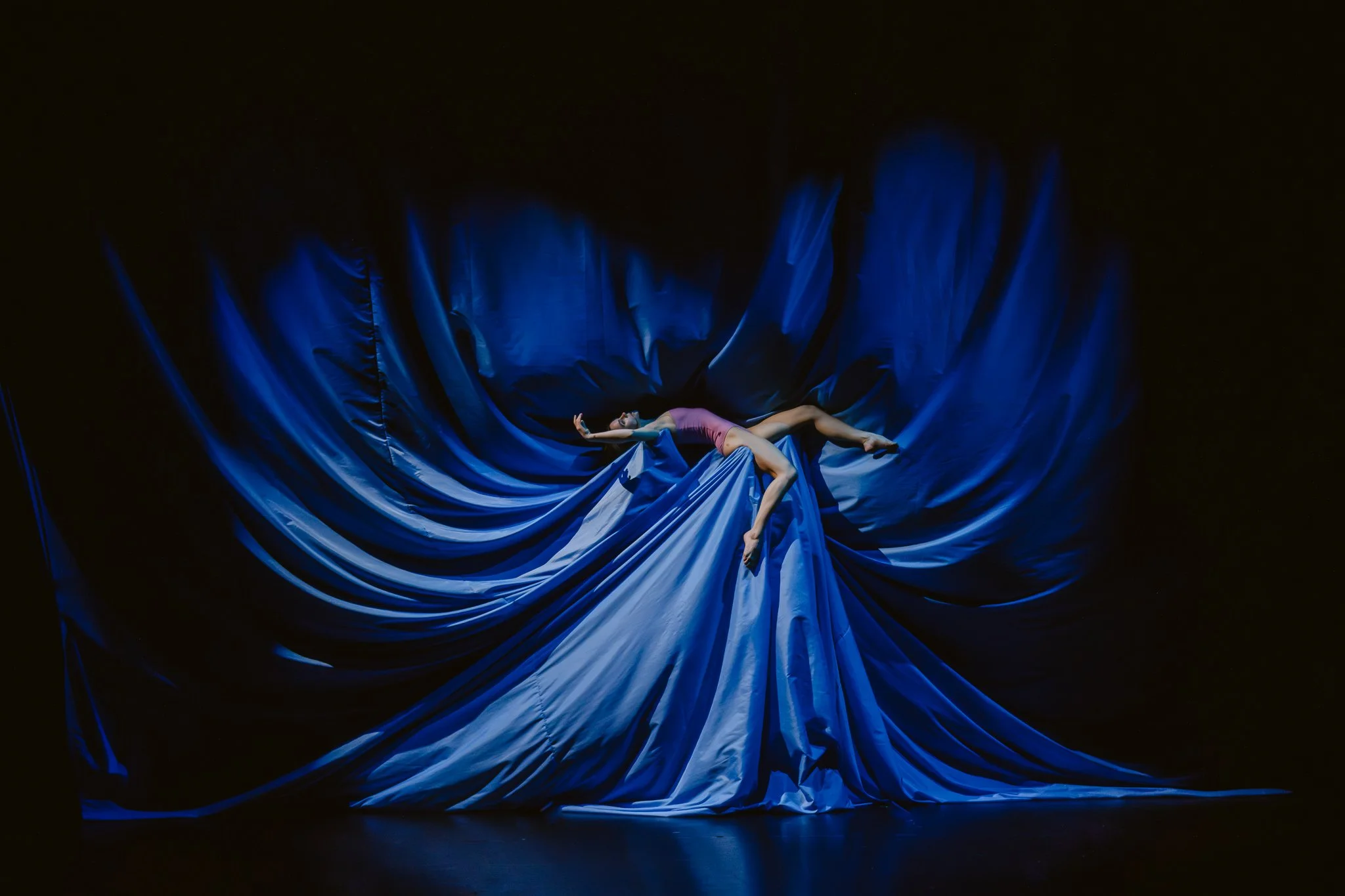
Carleen Zouboules’s Ophelia in Hamlet, Prince of Denmark. Photo by Stéphane Bourgeois
DanceHouse presents Côté Danse and Ex Machina’s Hamlet, Prince of Denmark at the Vancouver Playhouse to March 21, with community partners Bard on the Beach and Théâtre la Seizième
CAN YOU TELL a story as complex and text-based as Shakespeare’s Hamlet entirely through wordless dance?
The somewhat surprising answer is a resounding yes, at least in the hands of choreographer Guillaume Côté and theatre innovator Robert Lepage, whose Hamlet, Prince of Denmark is hitting the DanceHouse program this week.
The pair have skillfully distilled the plot to its essence, bringing it to life through expressive, nonliteral choreography and moments of visually stunning yet low-tech stage magic. The impressive production posits a new kind of narrative ballet—one that neither spoon-feeds audiences its story nor softens the contemporary edge of its dance or sharply edited design.
To be clear, the work isn’t entirely without words: in one of its most successful elements, the production employs typewritten surtitles to suggest scenes and play with words (“Enter Horatio”; “Alas poor Yorick!”). Hamlet’s famous line “Words, words, words,” spoken to Polonius, clicks onto the screen, before the S’s slide around to form “Sword, sword, sword”—and cleverly foreshadow a famous fight scene.
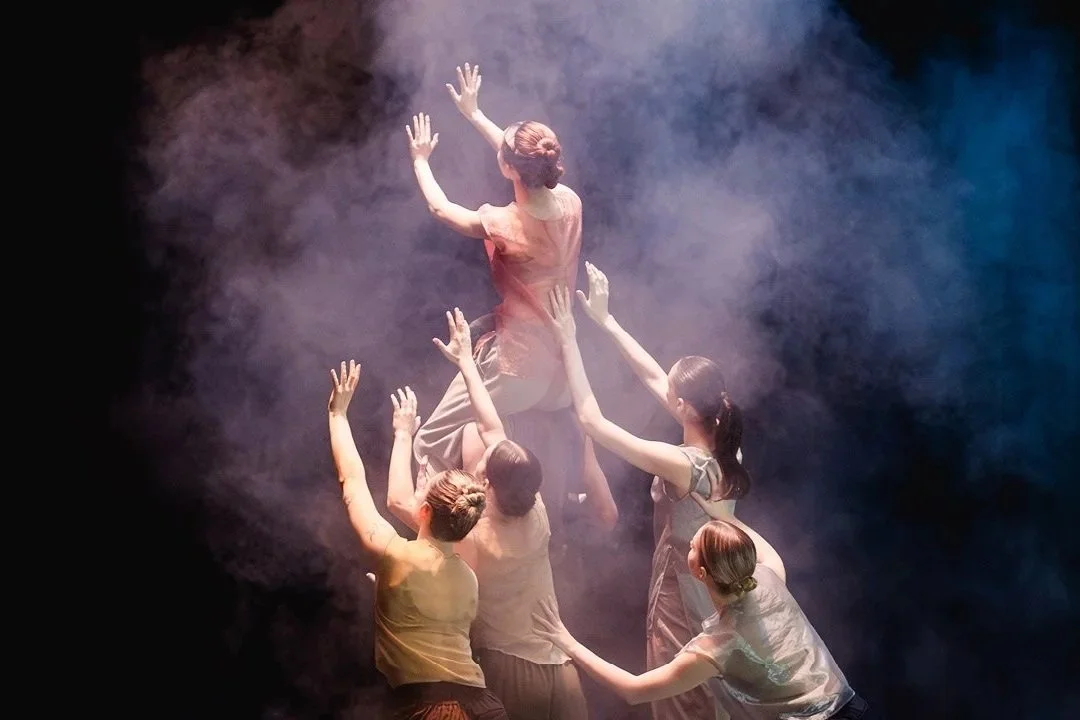
Simon Rossiter’s lighting and director Lepage’s stage designs conjure surreal and artful suggestions of the play’s key moments (plot points you may want to review before the show for the fullest experience of it). Ghosts arise from gauzy sheets or as monstrous shadows stretching behind white screens. As Ophelia descends into madness, hands reach for her from behind a hall of mirrors. She “drowns” in a blue sea of silk fabric that engulfs her and lifts her into its cresting waves. A murder thrusts the stage into red light.
Most impressively, though, the piece uses movement to depict the play’s complex relationships, with a notably dark take that doesn’t shy away from Hamlet’s violence. Carleen Zouboules is compelling as the fluid, emotionally vulnerable Ophelia, dancing one pas de deux that particularly captures the cruelty of the dark love story: she jumps again and again to wind her limbs around Hamlet, and he whipsaws around to try to throw her away. Hamlet partners with Gertrude (former National Ballet of Canada star Sonia Rodriguez) in a dance that suggests the Oedipal undertones and his conflicted feelings toward his mother. And though we don’t see Rosencrantz and Guildenstern meet their demise, we witness their lifeless bodies being dragged behind a blood-red curtain.
As Hamlet, Côté himself is the brooding centre of gravity, the other dancers spinning around him and crashing into his orbit. Horatio becomes his hyperenergized antithesis, interpreted by Natasha Poon Woo as a whirligig of motion; she is the magnetic guide for the audience through the story. Only seldom do the scenes feel extraneous or indulgent—the extended duel with ribbon-flailing swords becoming one sequence that slides into excess.
John Gzowski’s electro-acoustic score, with ripping electric guitar, sinister cello, and restless percussion, adds considerably to the tormented mood.
It’s been a while since audiences here have seen the genius of Lepage at work—as in unforgettable Ex Machina creations such as The Blue Dragon and 887 at SFU Woodward’s, when it was still programming world-class shows. Elsewhere on the continent, Lepage has long created inventive interpretations of the works of Shakespeare. Buzzed-about productions have included The Tempest at the Metropolitan Opera (which Vancouver choreographer Crystal Pite worked on and which inspired her acclaimed The Tempest Replica), as well as his audacious and frequently astonishing “Motorcycle Macbeth” at last summer’s Stratford Festival. So Hamlet, Prince of Denmark is a rare chance for Vancouver audiences to see the Bard’s work through the legendary Quebec artist’s distinctive lens—and so to experience a familiar play in a completely new way. 
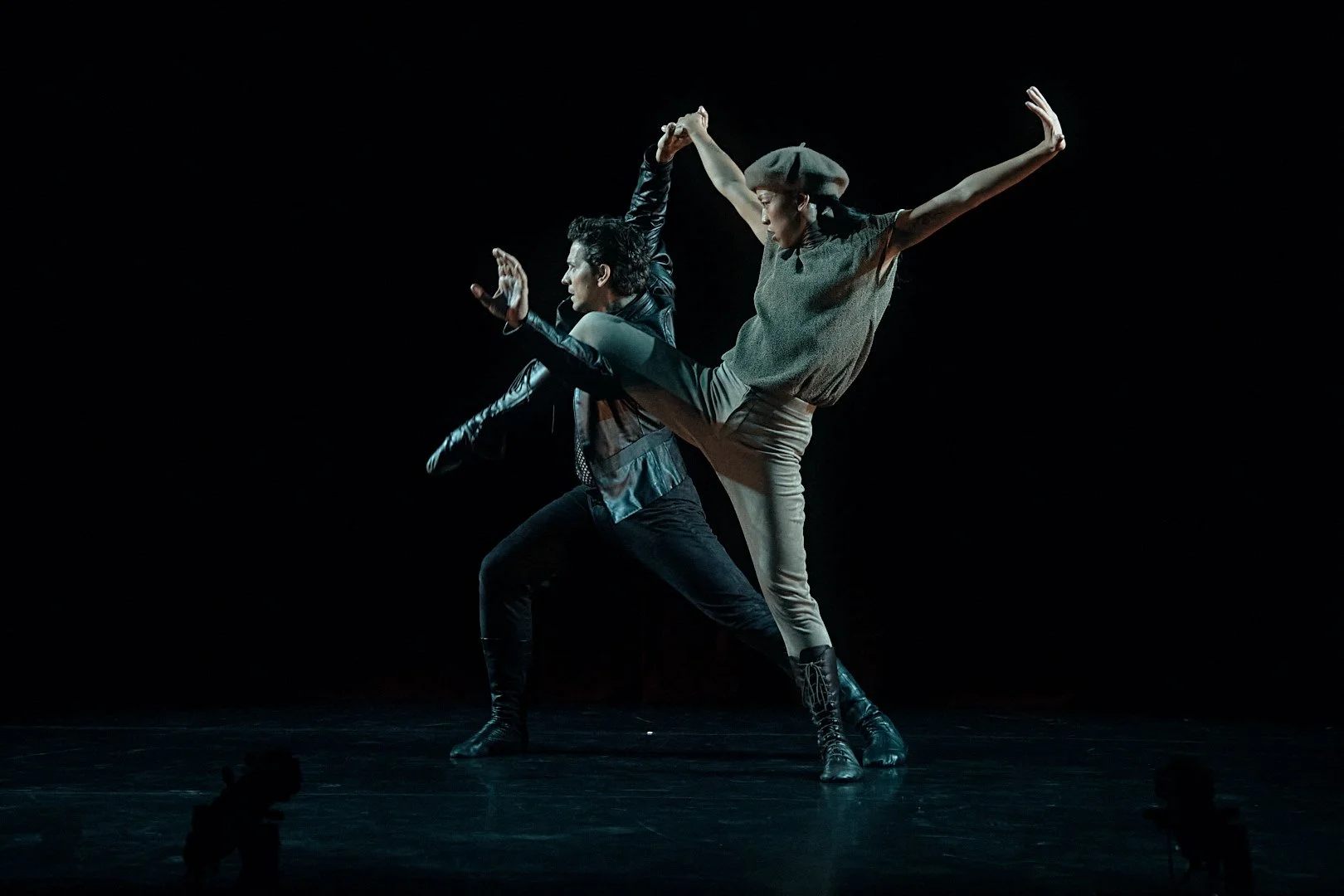
Guillaume Côté and Natasha Poon Woo. Photo by Sasha Onyshchenko

Related Articles