Theatre review: Meeting addresses sex and love addicts' desires with radical empathy
Set in Pacific Theatre’s activity room, play by Katherine Gauthier leans into realism with depth of character and lasting intensity
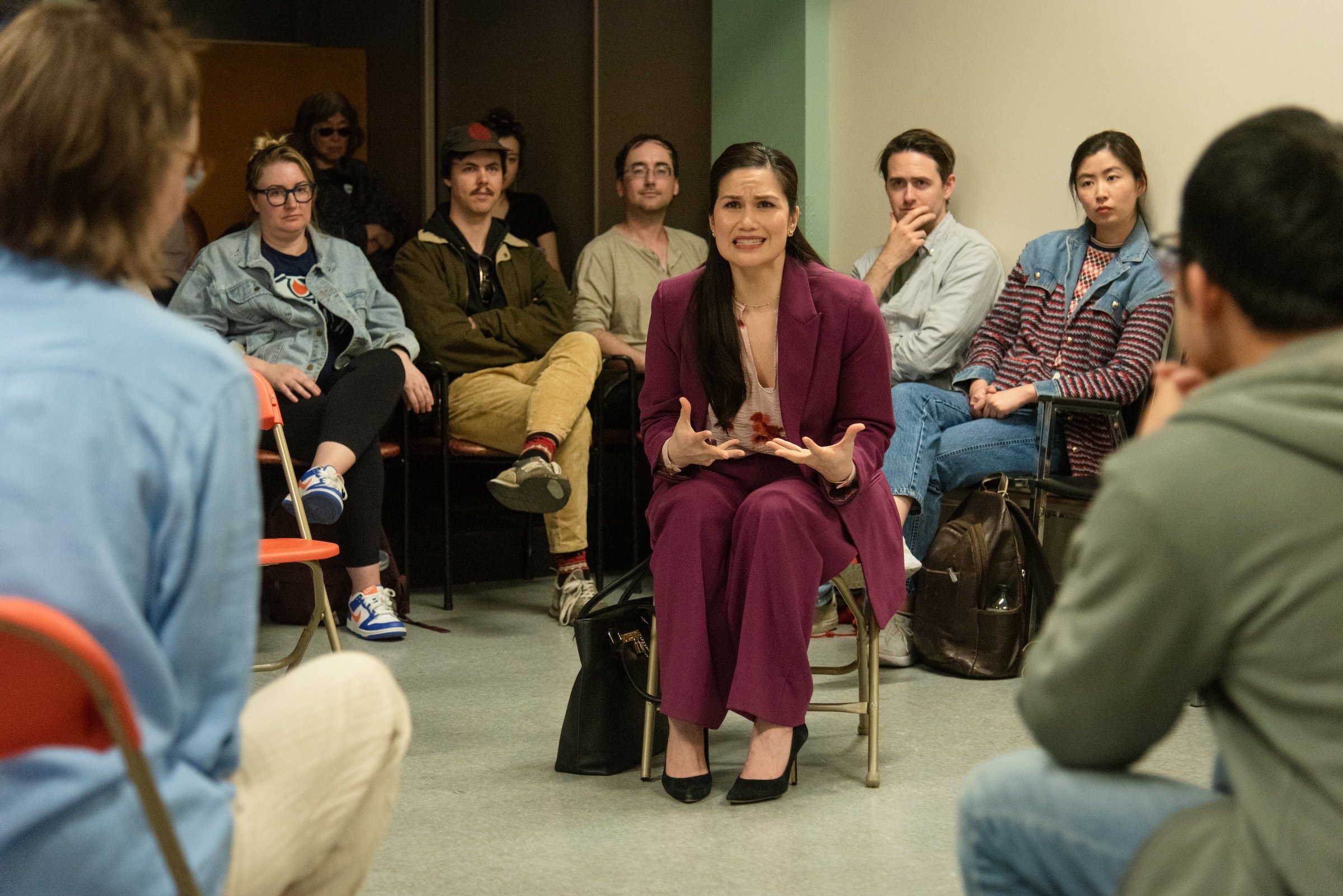
Meeting. Photo by Chelsey Stuyt
Pacific Theatre presents Meeting until June 7
A COLLECTIVE SIGH GOES around the room when Meeting ends, emanating from the audience sitting just outside the circle of chairs where all the action unfolds.
The space is tight. If you’re in the front row, you have to keep your feet tucked in when the actors pass by. The setup is simple: a fictional Co-Dependents and Sex and Love Addicts Anonymous meeting. The door to Pacific Theatre’s activity room closes and the lights overhead are clinical. There’s no music, no scene transitions, just the session unfolding moment by moment.
The play, written by Katherine Gauthier and directed by Neworld Theatre’s Chelsea Haberlin, leans into realism. Its five characters exist in the space the way people do in real life: shifting in their seats, checking their phones, getting up for a refill just to have something to do. Movements feel unplanned and even the big emotional moments seem to rise out of whatever’s already building in the room, for the most part.
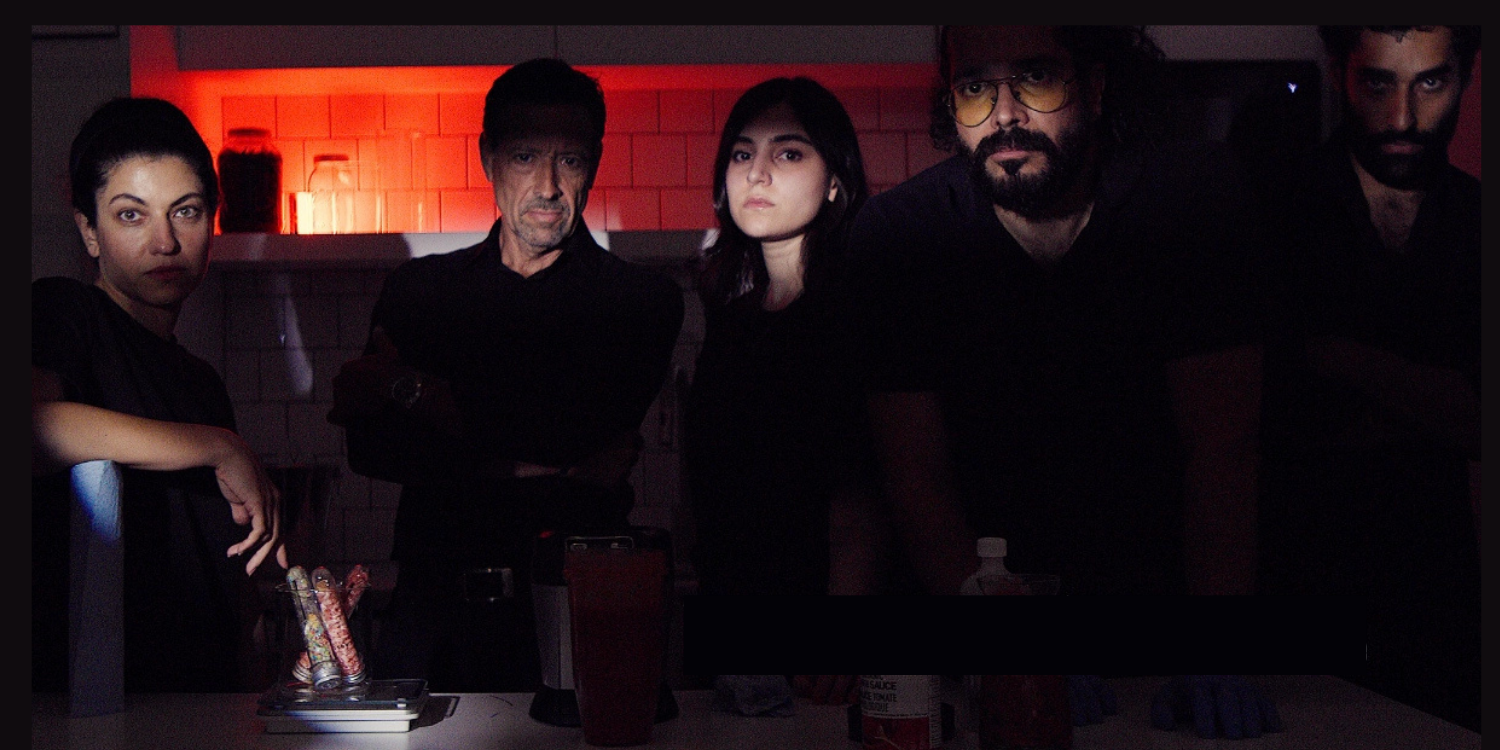
We’re brought into the room with Dawn (Kaitlin Williams), the well-meaning but slightly in-over-her-head group facilitator. She’s there with two regulars: Linda (Carmela Sison), a love addict and sharp-tongued lawyer, and the analytical and casually confessional Patrick (Chris Lam), who is working through a porn addiction. We get to know them as they get to know the two brand-new members—Rob (Sebastien Archibald), a jittery sex addict who’s mostly there to get his attendance form signed, and the meek Arthur (Marcus Youssef), who describes himself as a “sexual anorexic”. It’s a group of five very different people, all carrying their own damage, trying to offer each other support.
There are rules in place, things like no interrupting and no cross-talk, but they start to slip as the stakes rise. And not that things are rosy from the start, but it all shifts even more when Arthur makes a confession, a bit like pulling teeth, that yanks the ground out from under the room. From there, it becomes about what’s being said and about how people sit with it, or can’t.
Arthur’s confession is not a moment that’s played for shock, though you do get the sense that he’s been holding it in for a long time. Youssef plays the character thoughtfully with this soft, wounded energy—someone who barely takes up space, who seems ashamed of his own existence. The play gives him room to speak, and it doesn’t give the audience an easy out.
The fact that Meeting goes there, and does it without tipping into something sensational—is rare. There’s a kind of radical empathy at work here, not because things get smoothed over, but because Arthur is surrounded by people who push back in different ways. Patrick offers measured, thoughtful responses, often bringing in science or ethics in an empathetic way. Linda is more guarded and quick to react. And Rob is just blunt, openly hostile from the start. Together, they bring up the question the play keeps circling: is it possible to hold space for someone whose desires you don’t understand, and maybe never will?
The cast moves through that tension with a careful rhythm. Patrick’s detachment brings clarity when things start to spiral. Rob throws the group into conflict, sharp and explosive, while Linda lands somewhere in the middle. She judges, lashes out, but slowly shifts like someone who’s been doing the work and knows how to sit with discomfort. Each person displays a believable sense of introspection, and you can feel how much depth of character was built in rehearsals.
There’s also Williams in a great turn as the sensible Dawn. The facilitator tries really hard to hold things together, but eventually gets pulled in, too. During a chair exercise (wherein one person role-plays a conversation they need to have, as mental health professional Tricia-Kay Williams explains in the facilitated post-show discussion), Dawn steps in as Arthur’s step-granddaughter. What starts as a tool to help him practice setting a boundary turns into something else. Her own history comes up, and lines get crossed. The scene is intense and beautifully acted by Williams.
Overall, Meeting is tightly built. Its reveals jolt, shift the energy, and change how you see what came before. The pacing doesn’t slacken, but by the final stretch, the realism that’s been carefully constructed feels a little different. Not because the performances falter—far from it—but because the emotional beats amid all the breakthroughs start to pile up a bit too fast.
Still, the show’s compressed intensity feels like part of the experiment. Meeting doesn’t offer easy catharsis, and it doesn’t present its session as typical. It acknowledges its own constructedness, even as it immerses the audience (caveated before and after the show and in the production notes). If its realism eventually gives way to something more heightened, it’s only because the play is trying to hold too much at once: pain, healing, empathy, exposure. It may not resolve much, but it opens a door, and insists we stay in the room long enough to feel what that means. 

Related Articles