Theatre review: Fire Never Dies reveals the glamour and grit of Tina Modotti’s life as artist, muse, and activist
Written and directed by Carmen Aguirre, Electric Company Theatre’s new production hums with the complex, revolutionary rhythms of 20th-century art and politics

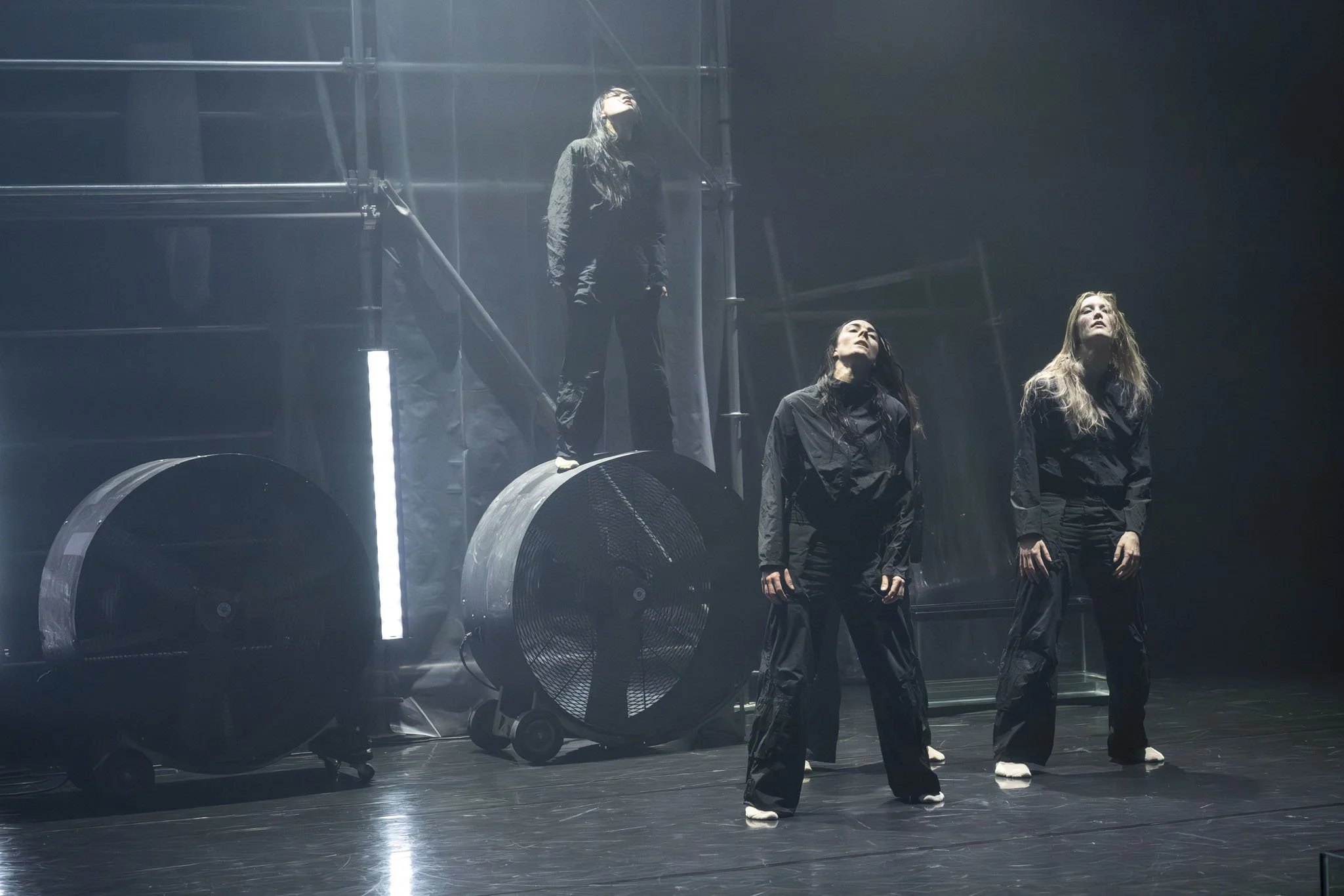
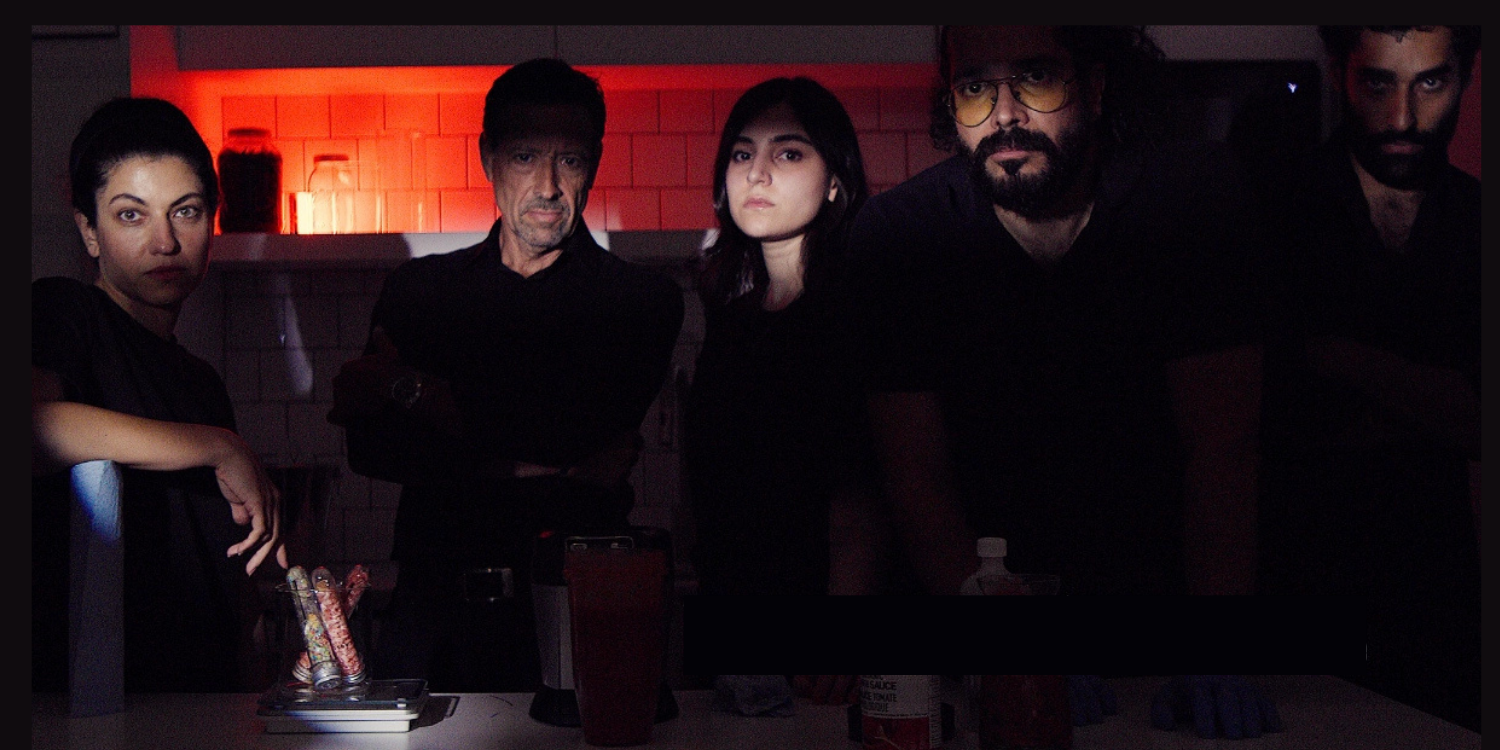
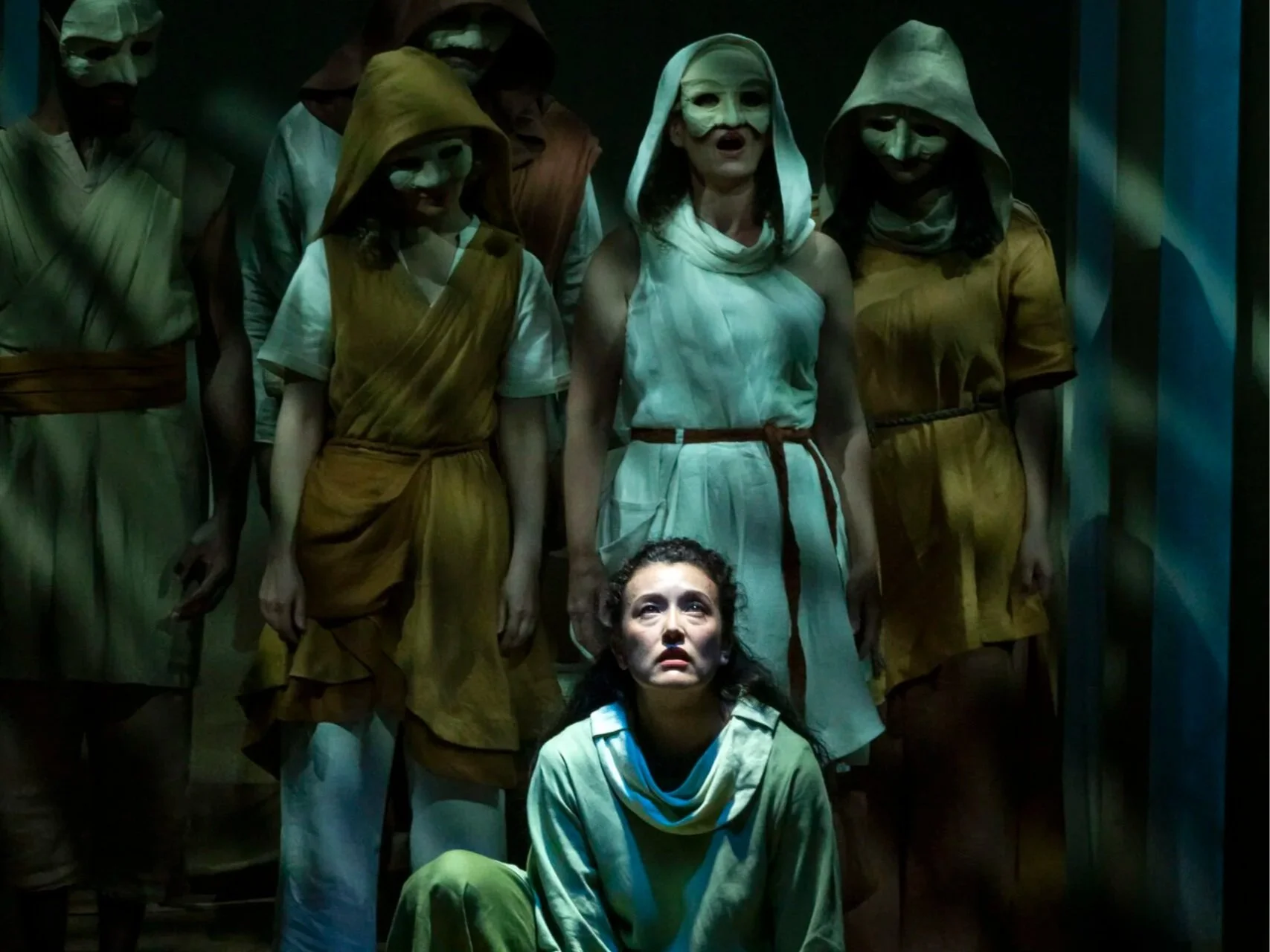
Melissa Oei, Marianna Zouzoulas, and Ximena Garduño in Fire Never Dies: The Tina Modotti Project. Photo by David Cooper
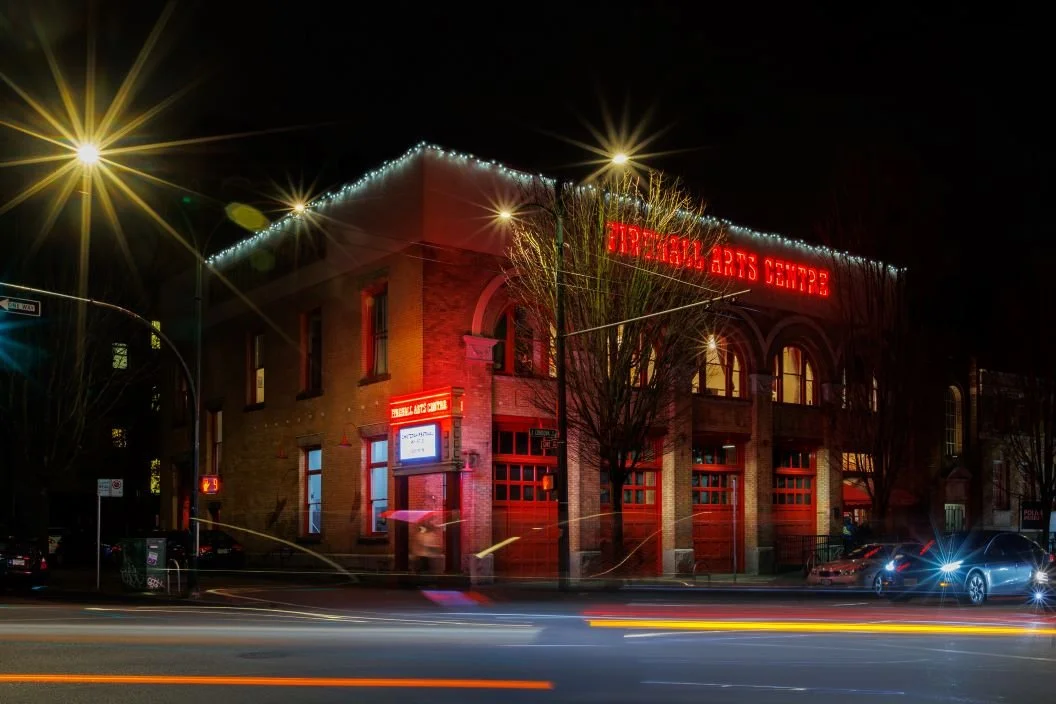
The Cultch and the Vancouver Latin American Cultural Centre present Electric Company Theatre’s play Fire Never Dies: The Tina Modotti Project at The Cultch’s Historic Theatre to October 26
IT’S ALWAYS MOVING TO come across someone in history who burned a little brighter than the time they lived in. Even better when their light still reaches us, flickering through the records and stories they left behind.
For many, Tina Modotti is a faint outline, an elusive figure glimpsed through the fame of others. Her own achievements and art have often been overshadowed by the love affairs she had with more than one 20th-century luminary. These included photographer Edward Weston, the Cuban revolutionary Julio Antonio Mella, and artists Frida Kahlo and Diego Rivera.
Fire Never Dies: The Tina Modotti Project is full of biographical texture, but it never calcifies into trivia. Instead, it’s engrossing, self-reflexive, and humanist in holding Modotti’s light to the present and asking what still burns.
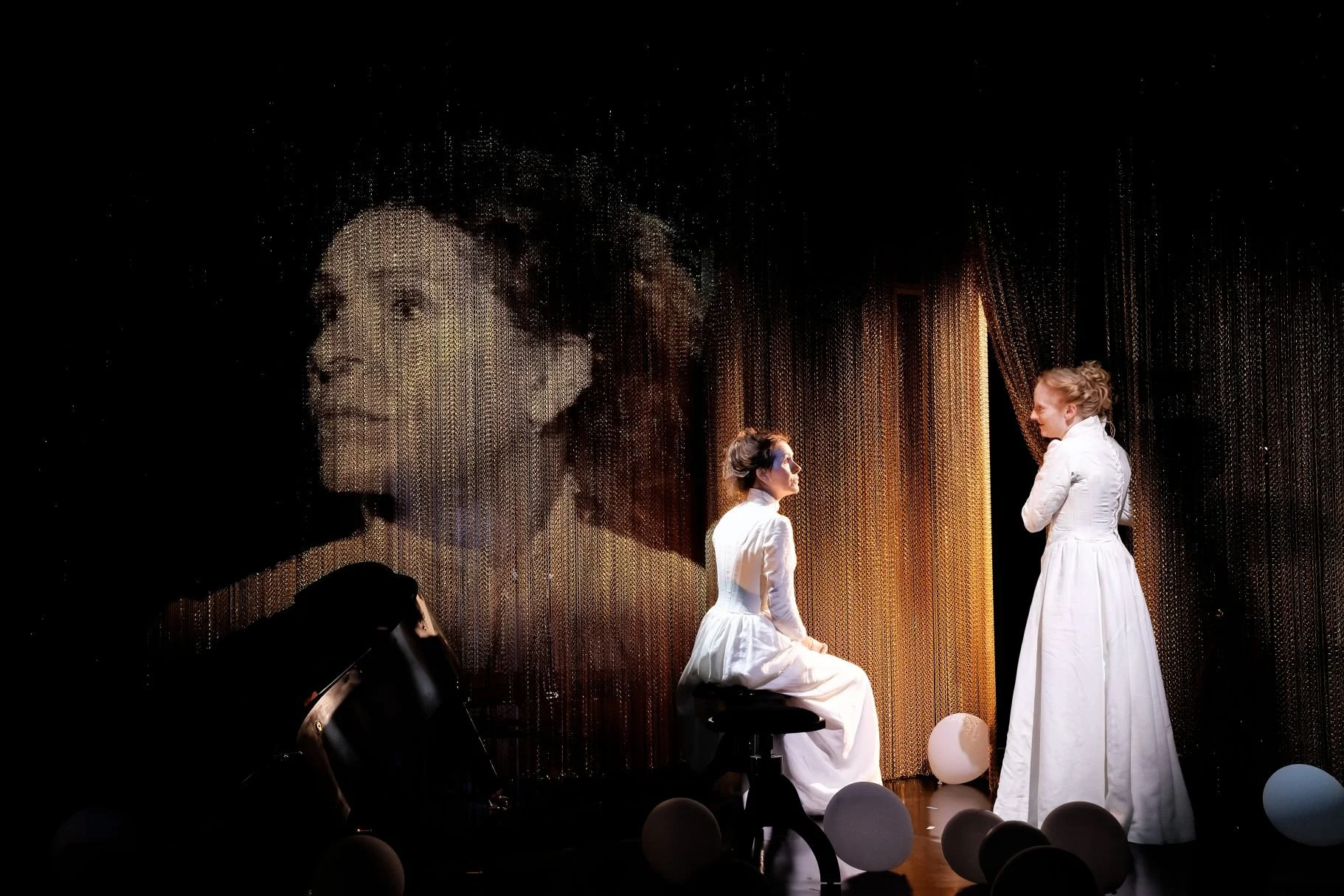
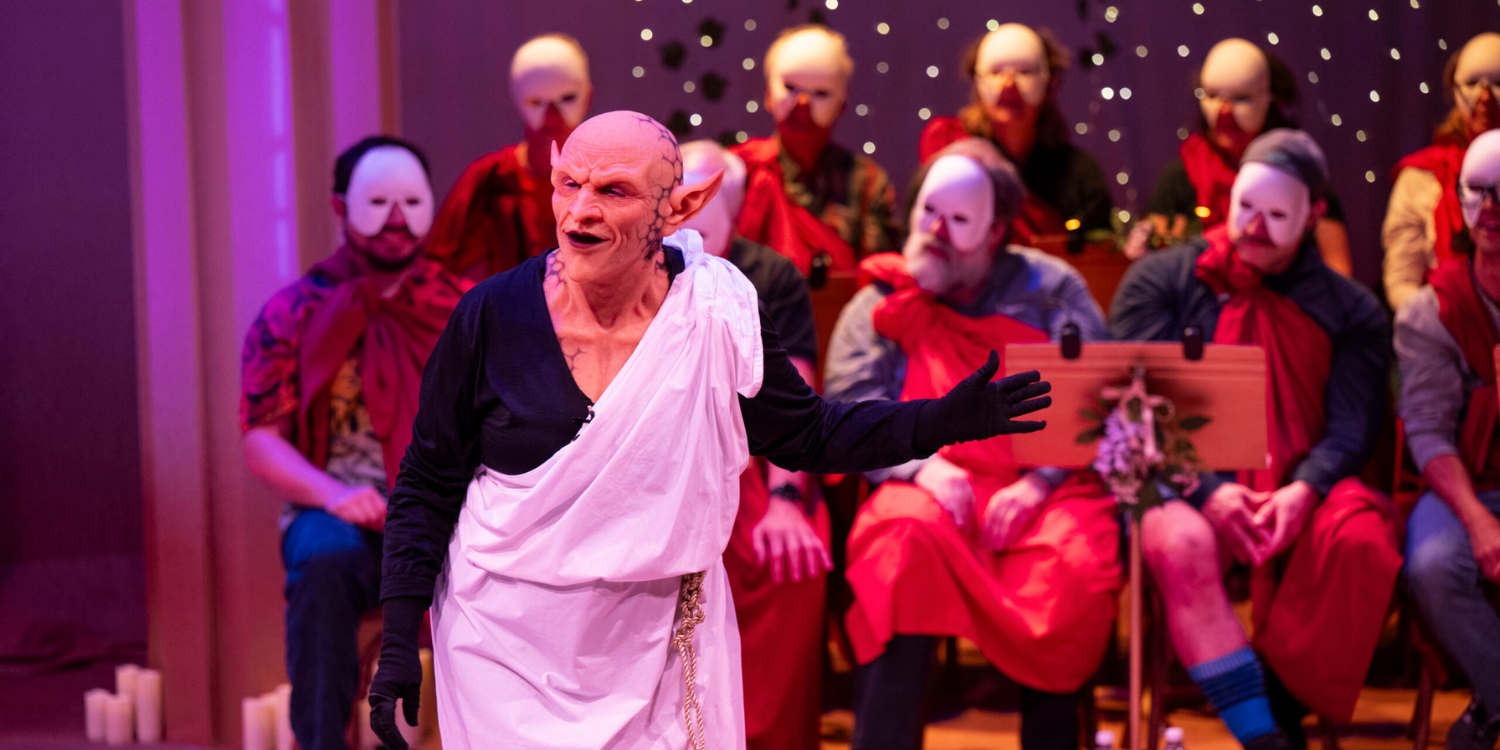
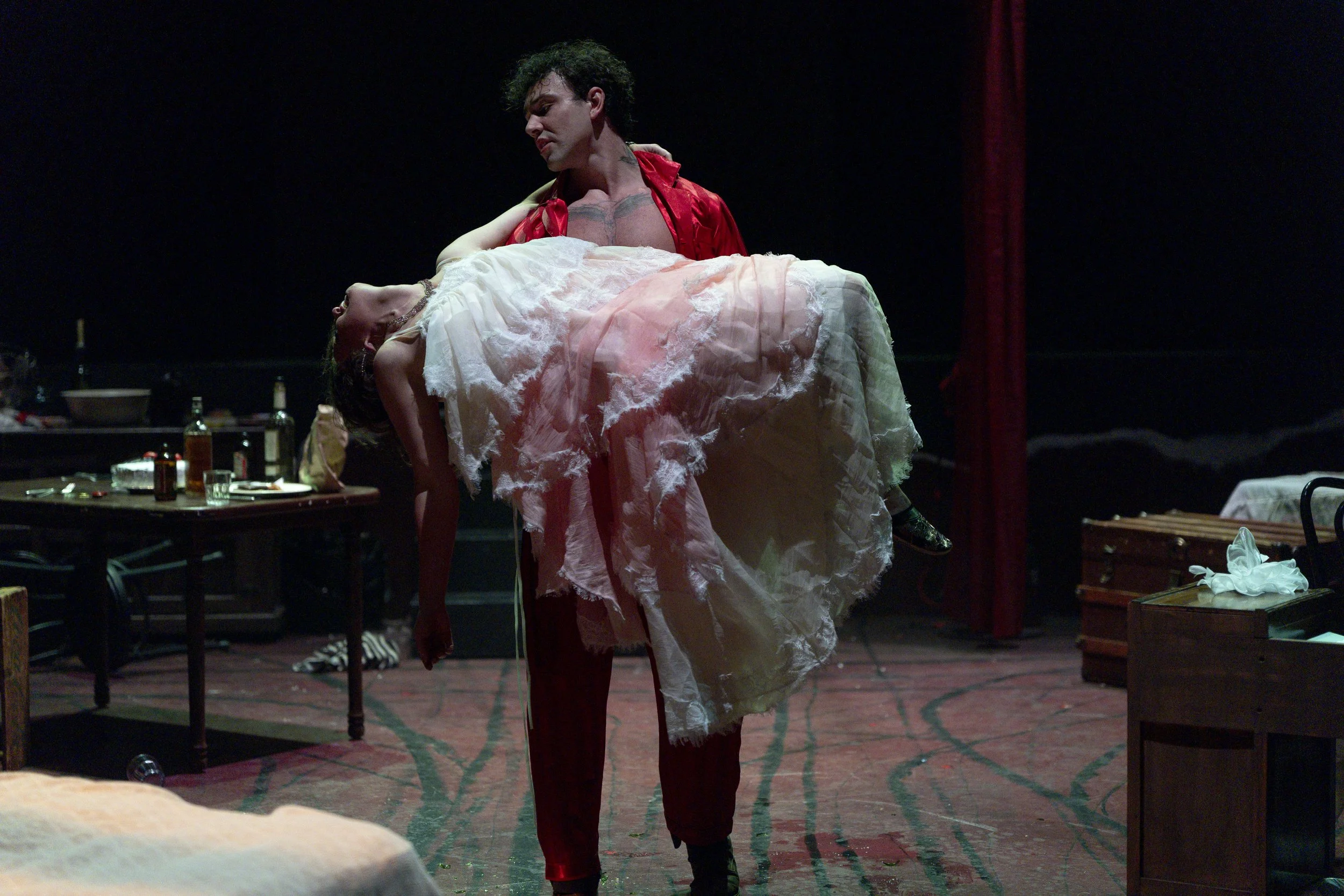
Familiar figures catwalk onstage in costumes saturated with the glamour and grit of the era and of the circles Tina ran in. The play unfolds as a sequence of lively fragments, each moment a flare from Modotti’s life. Transitions are brisk, often carried by music by Latin American artists like Victor Jara and Fito Páez. The lighting is expressive and the projection design gives the story its rhythm, grounding each scene with photographs and artworks that click into focus just as Tina’s memories do.
The photographer and activist’s life ended short at 45, yet she managed to make longer lives seem spare. The play opens with her death in Mexico City, then retraces her life in fragments that leap through time—moments of love, work, lust, passion, pain, and conviction. It follows her from a childhood in poverty in Italy to her immigration to San Francisco, through her years in Mexico (the place she considered closest to home) and into her exile from that same country, where she developed a visual language that would echo through the country’s own history, before devoting her later life to the Communist cause in Spain, Germany, and Russia.
The biographical texture is rich: the affairs, the politics, the restless movement between countries. The play situates Modotti (played by Marianna Zouzoulas) within the wider political and artistic currents of her time and salutes her role in it. It also lets us in on the making and remaking of a revolutionary spirit.
Partly, that’s because playwright and director Carmen Aguirre follows feeling and emotional coherence over accuracy or chronology. Her portrait of the artist moves the way memory does: rhythmically and with flashes of clarity and ache.
There’s also something inspired in the meeting of Aguirre and the character of Modotti. The Chilean-Canadian theatre artist, actor, and writer gives the material a kind of emotional authority that can’t be faked. You get the sense she approaches her protagonist not as a subject to master but as someone to be in conversation with, a kindred spirit, shaped by similar impulses and questions, met in solidarity across time.
Aguirre has walked her own line between art and resistance. Her memoir Something Fierce traces her teenage years in the Chilean resistance during the Pinochet regime, and that history runs like an undercurrent here. She knows what it is to live between creation and confrontation, and the endless push and pull between arts and politics.
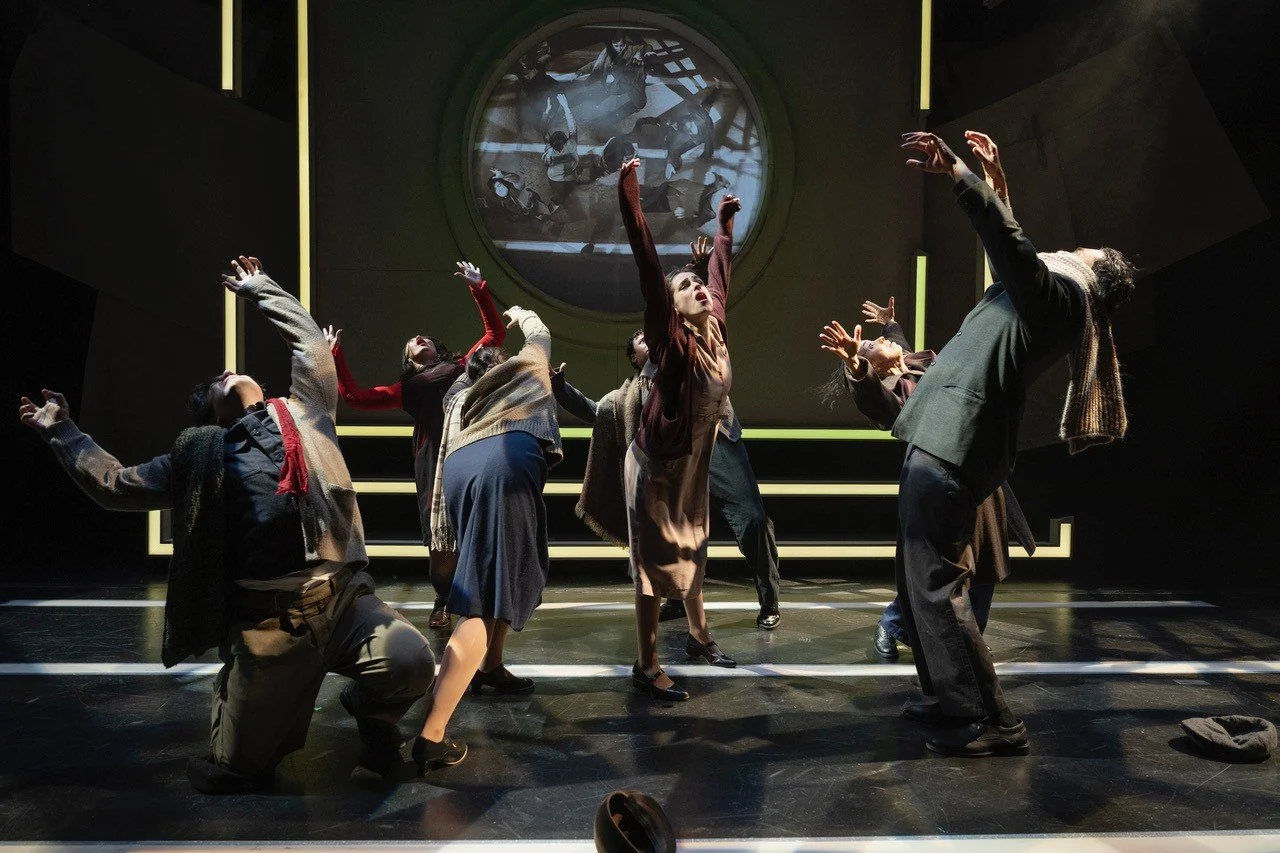
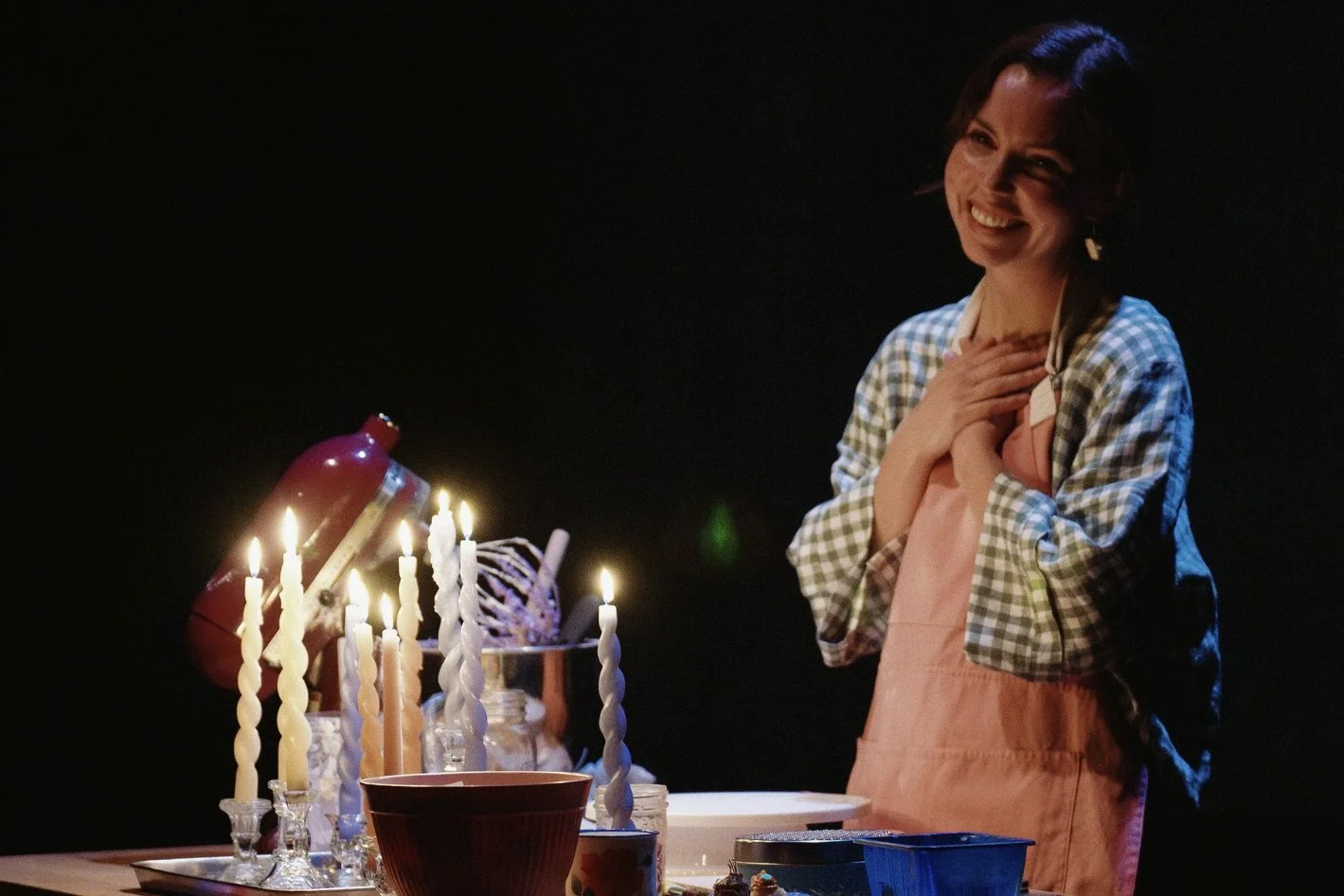
Fire Never Dies: The Tina Modotti Project. Photo by David Cooper
Fortunately, rather than polishing Modotti into a saint or icon, the play keeps her contradictory and alive, someone who was at once artist and muse, creator and image, restless and exhausted.
You can feel the weight this performance asks of its lead, and that visible weight to the performance suits the story. You can see it in the way Zouzoulas carries Modotti—the tension in her shoulders, the restraint in her gestures. Across from her, the sagradx corazón, an embodiment of the protagonist’s heart (played with gusto by Melissa Oei), feels like everything Modotti tried to quiet: pure desire and instinct. The two funnily repel each other at times, opposites in movement and tone, but something comes together as the play goes on.
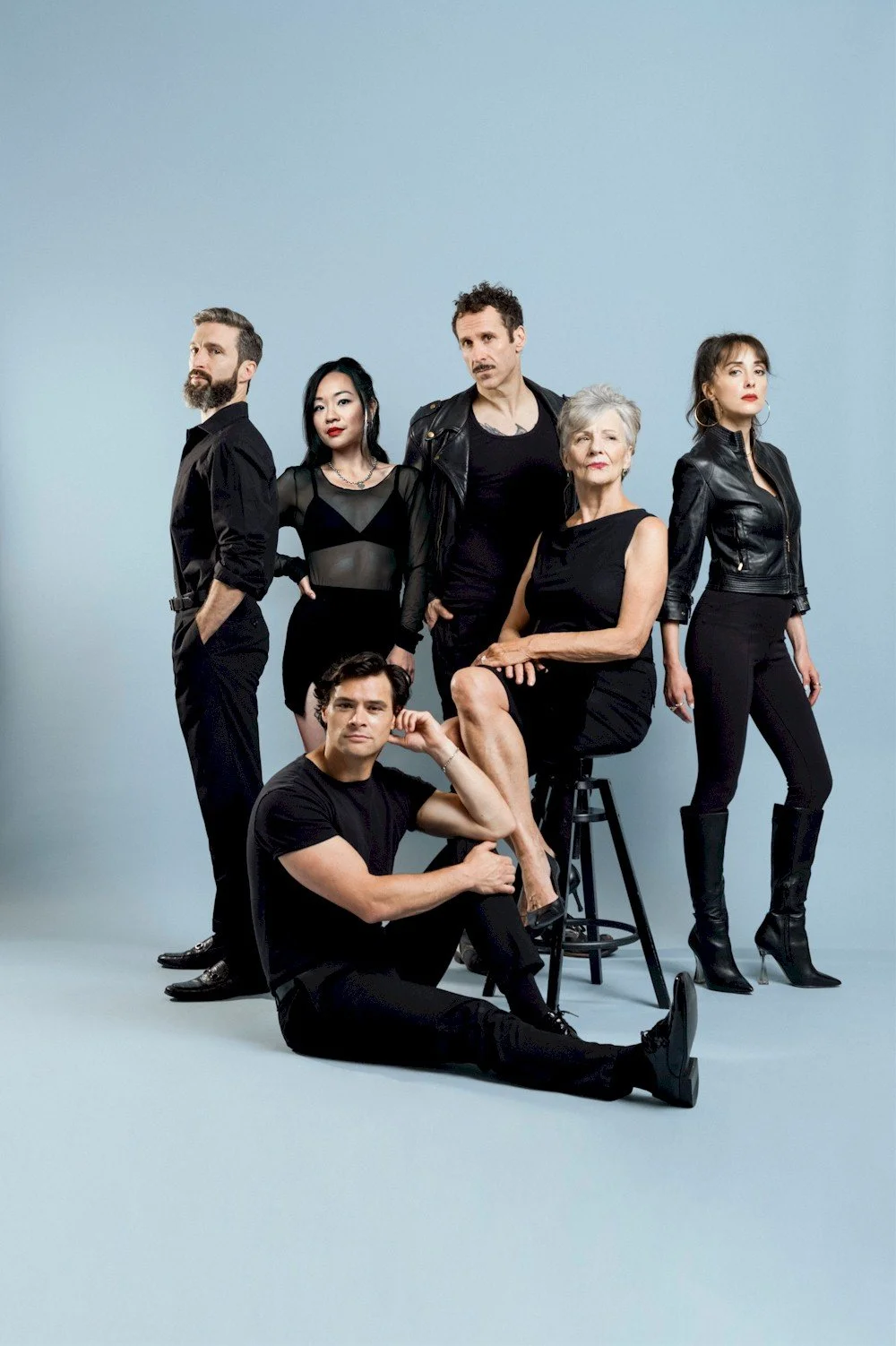
That rhythm extends through the cast. Ximena Garduño as Frida Kahlo is a standout. As the iconic figure she’s sharp, funny, and magnetic (and has the most natural Spanish accent out of all the cast). Her presence sparks against Modotti’s seriousness in a way that feels conspiratorial rather than competitive. The rest of the ensemble, who all play double roles, fills out the world with the sense that everyone onstage is part of the same current, orbiting around and feeding into one another.
The play hums with those correspondences: between Tina and her heart, Tina and her lovers, between her photographs and the moments they recall, between past revolutions and the traces of them still visible today. There’s some cosmic rebalancing happening here, as Fire Never Dies gives those echoes form and heartbeat again. 

Related Articles