Xiu Xiu explores the sonic and visual worlds of David Lynch’s surrealist horror classic Eraserhead
At VIFF Live, the experimental rock band’s Jamie Stewart and Angela Seo imagine what sights and sounds could exist beyond the edges of the writer-director’s debut feature
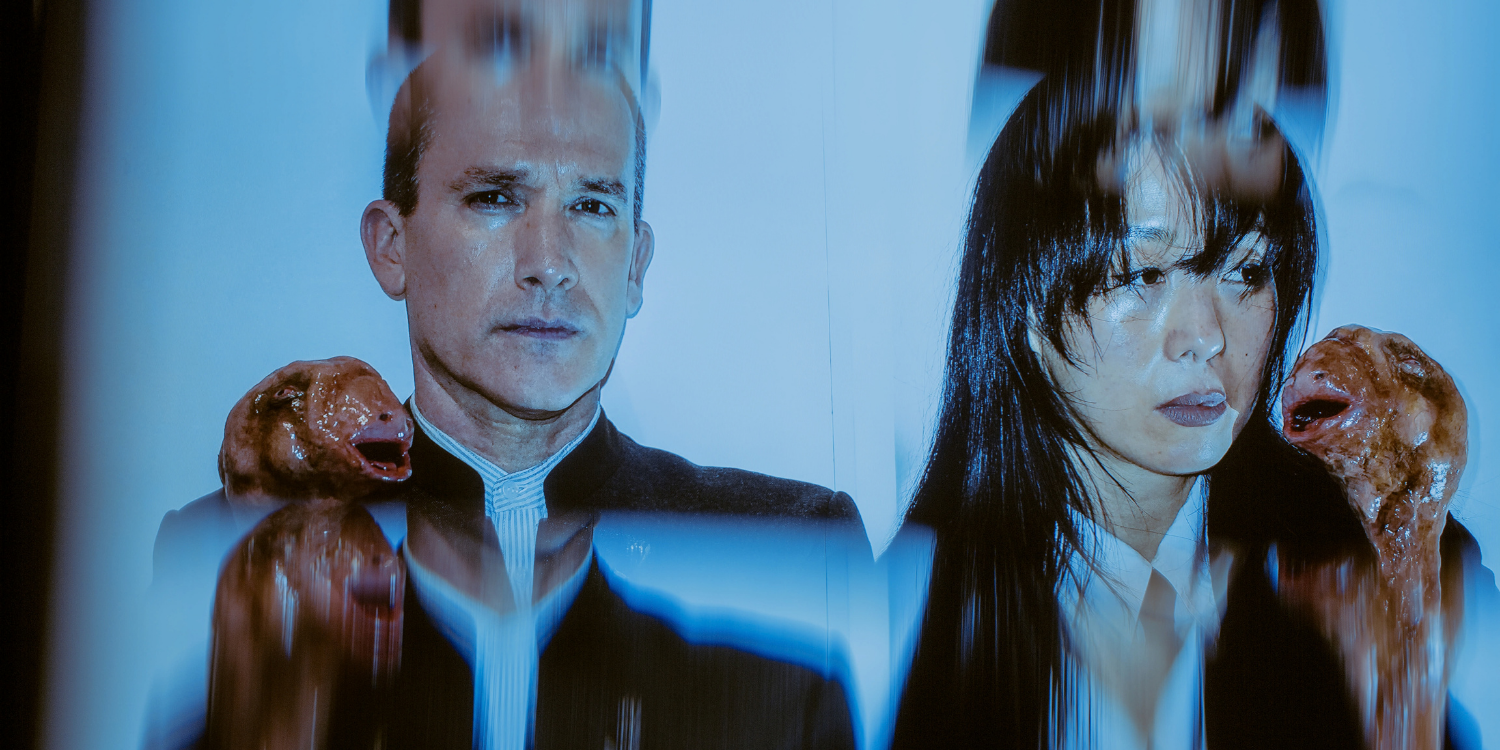
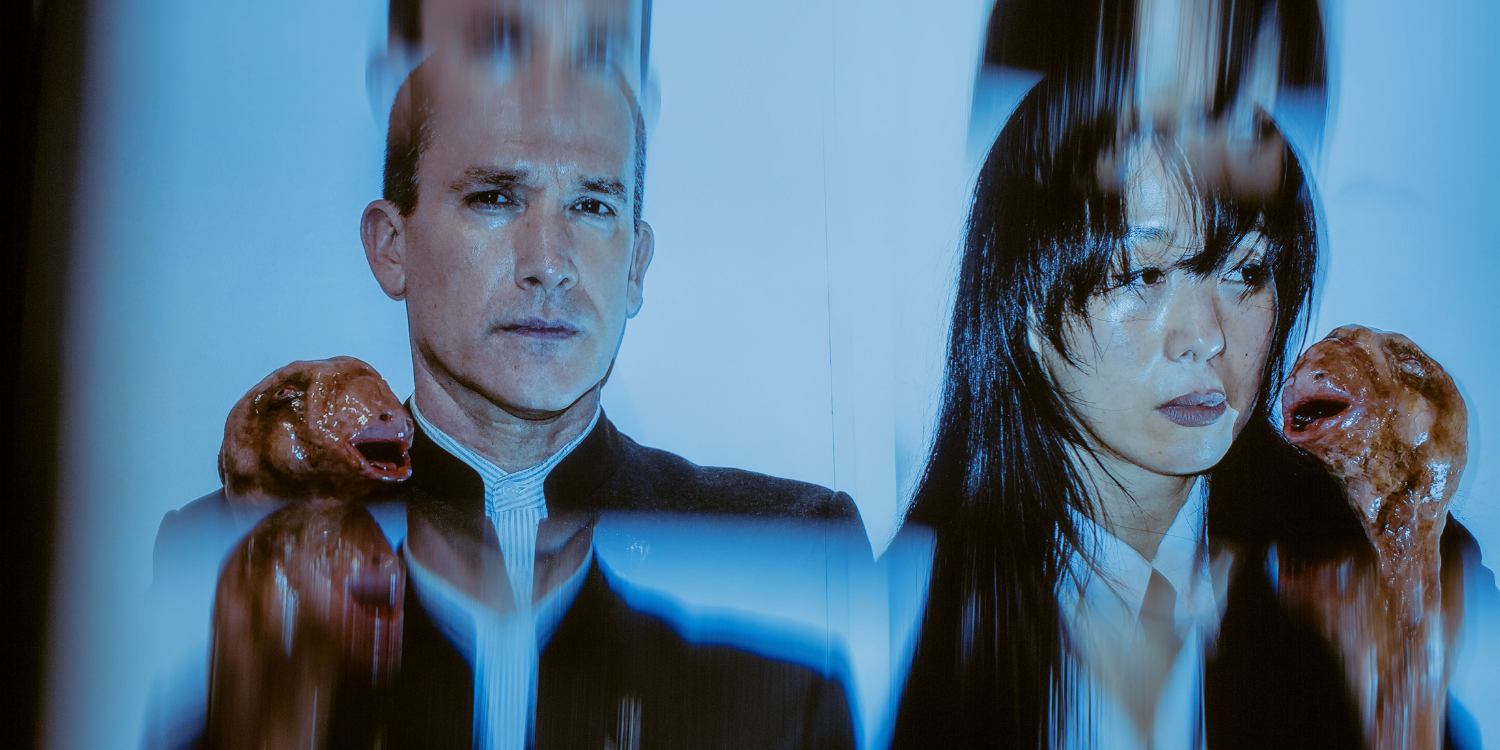
Xiu Xiu’s Jamie Stewart and Angela Seo. Photo by Joe Stewart
VIFF Live presents Eraserhead Xiu Xiu at the Rio Theatre on October 6 at 8:30 p.m.
YOU WOULD BE forgiven for assuming that Eraserhead Xiu Xiu is either a screening of David Lynch’s 1977 first feature with live accompaniment by Xiu Xiu or simply a concert in which the experimental rock band performs the film’s score.
Neither of those is the case, as Xiu Xiu’s Jamie Stewart explains on a Zoom call from his studio in Berlin.
“We’re not playing to the film of Eraserhead,” he says. “We’re doing an interpretation of the aesthetic of Eraserhead, which is very, very distinct. And the way that we thought about it was, what if Eraserhead was 12 hours long instead of two hours long? What other sounds that would fit in that world could still happen? Our concert’s about 50 minutes long, and we made a 50-minute film to go along with it that has no footage from Eraserhead, but, again, if Eraserhead was 12 hours long, what else could possibly have been in Eraserhead?”

Jack Nance in Eraserhead
The fact is that a straightforward live performance of the surrealist body horror movie’s soundtrack would be a Sisyphean task. Apart from a few snippets of Fats Waller tunes played on a pipe organ and one undeniably haunting original number called “In Heaven (Lady in the Radiator Song)” (composed by Peter Ivers, with lyrics by Lynch), Eraserhead doesn’t feature much in the way of music. What Lynch and sound designer Alan Splet created for the film was more of a sonic world than it was a score. Reflecting the movie’s ineffable emotional resonance and the crumbling industrial façades of its Philadelphia setting, Eraserhead hums, hisses, and buzzes, constructing an aura of never-to-be-resolved tension.
In a superb Paris Review article about Splet’s collaborations with Lynch, Richard B. Woodward wrote:
“Fats Waller reverberates as though Lynch-Splet had patched into a broadcast from a Depression-era skating rink. The sound is chilling, ancient, faraway, as though time itself had physically decayed.”
Stewart acknowledges the impossibility of “covering” most of this material, which is why he and his Xiu Xiu bandmate Angela Seo didn’t set out to attempt it. “We do a cover of ‘In Heaven’, which is the one song that’s in Eraserhead, and we do play the two Fats Waller songs that are in Eraserhead, but the rest of it is post-industrial soundscapes that we feel like could have possibly fit into the movie, even though they weren’t in the movie,” he says. “The way we have described it several times is, if Eraserhead was a planet, then we’re exploring the broken satellites and dead extraterrestrials and space stuff that’s floating around the planet of Eraserhead. So it has come from the planet, but it is not the planet.”
Lynch and Splet worked on the film’s sound design for about a year, creating each crackle, creak, and mutant-baby gurgle from scratch. They experimented wildly, placing a microphone inside a glass jug and submerging it in a bathtub; they recorded the internal sounds of an old movie camera and slowed down the tape.
Stewart and Seo, of course, were working in the era of Ableton Live, with a seemingly infinite library of extant sounds and endless ways to manipulate them with the click of a mouse. Xiu Xiu, though, has always taken a more DIY approach to generating bespoke sounds.
“We always do that,” Stewart says. “The timbre is as important to us as melody and harmony is. And since we started, we’ve put a great deal of time and thought into the sounds that we use. And frankly, if I could just make crazy sounds for the rest of my life, I would be in heaven.
“A lot of the sounds that we use are taken from traditional ideas of musique concrète,” the musician and producer elaborates. “We did a ton of field recording. We made some instruments for this live show, and we put some synthesizers together in ways that we don’t normally use. Similarly to them [Lynch and Splet], we did not just load up Ableton and start going through menus of other people’s previous samples. We made all our own sounds, all our own samples. Just for the sake of being able to take this somewhere, we do use samplers to play these sounds, but we made the samples ourselves.”
Polyvinyl Record Co. released the studio-album version of Eraserhead Xiu Xiu in July, which gives a fairly accurate idea of what the live performance is like, minus the visual component.
“The live show is very, very similar to the record,” Stewart says. “It’s 100,000 times louder than any stereo you would have, because it’s through a giant PA, but we’re following the same score. But because there’s a certain amount of improvisation, it’s not exactly the same every night.”
Stewart and Seo will tour the Eraserhead show throughout October, with a few additional dates at the very end of 2026 and ’27. After that, they’ll reunite with the band’s third member, percussionist David Kendrick. Stewart says a “normal Xiu Xiu record” is in the works, and that means significantly more gruelling performances are also on the horizon.
“We have been talking about how totally spoiled we feel, because regular Xiu Xiu shows are really physically intense, and we’re quite spent afterwards,” Stewart says. “And this one, there’s almost no physicality in it whatsoever. I don’t even sweat after the show. So we’re feeling kind of spoiled by these. Obviously we’re looking forward to playing again, but it’s going to be an adjustment to get back into the real world for us, instead of this black-and-white dream world.” 

Related Articles