Dance review: Found-object sculptures add to All That Remains' eerie landscape
PuSh Festival opener explores a dance between humans and the industrial waste they leave behind
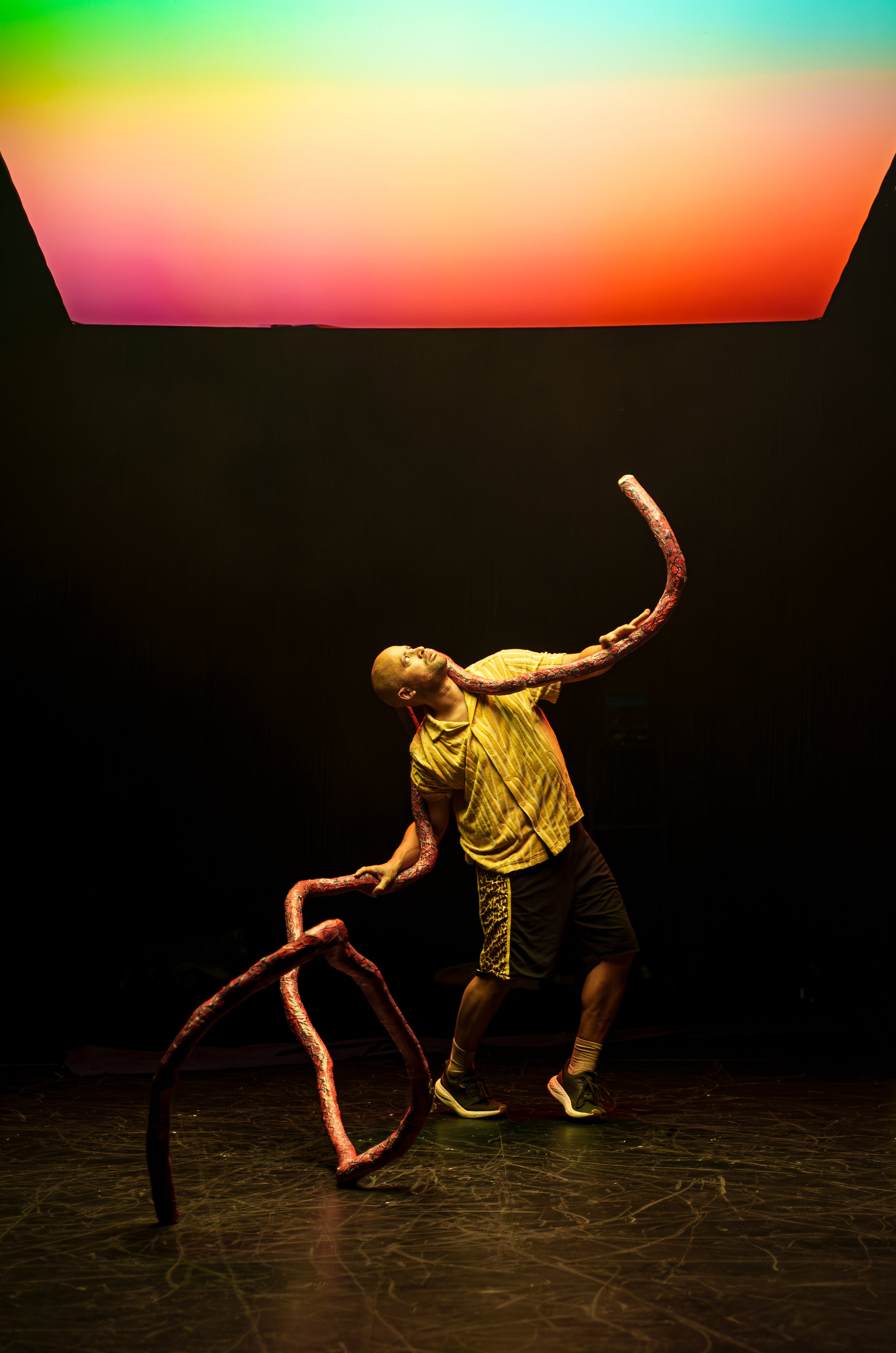
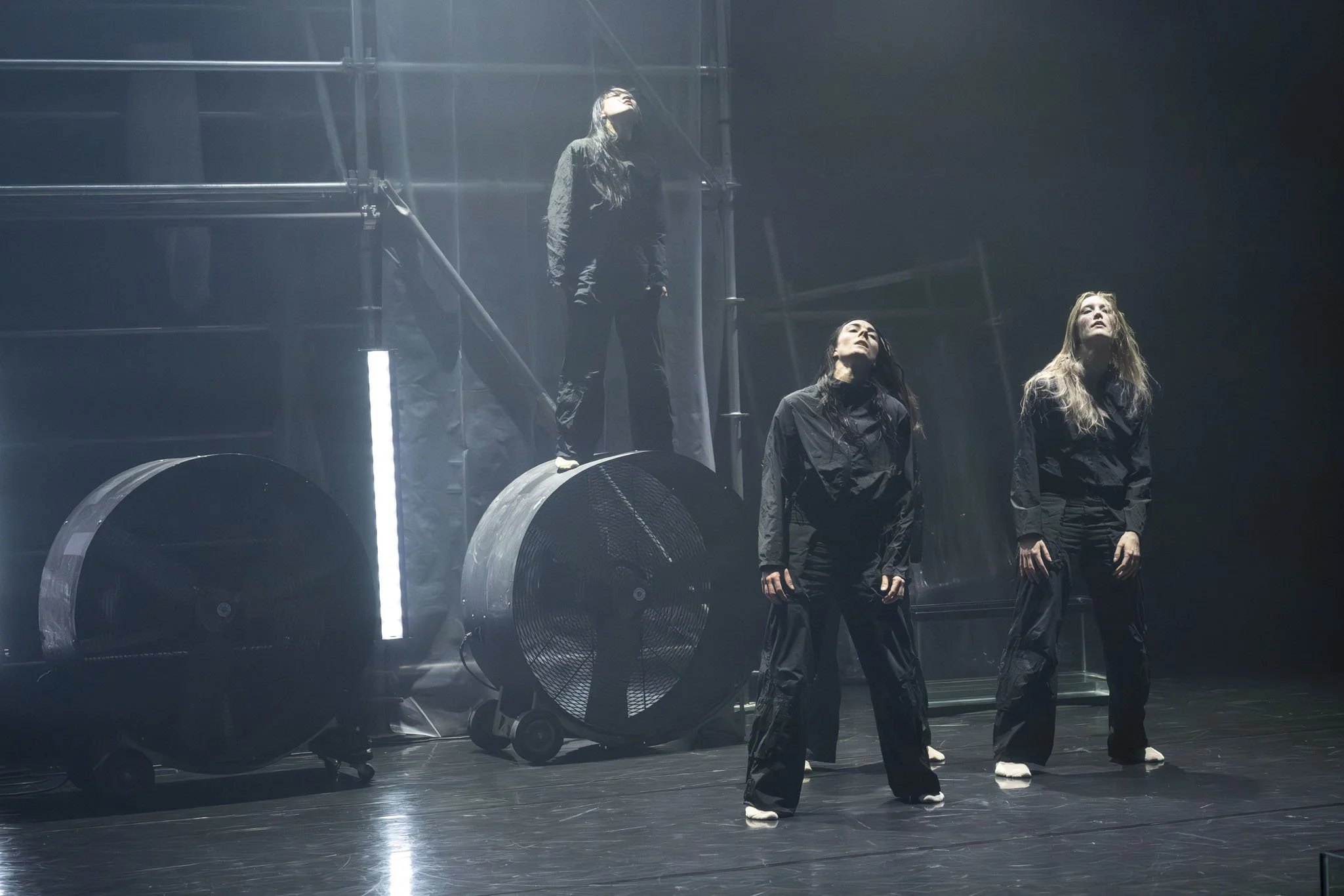
All That Remains. Photo by Christoffer Brekne
All That Remains continues at SFU Woodward’s Goldcorp Centre for the Arts until January 24
ALL THAT REMAINS, the avant-garde dance work that opened the PuSh International Performing Arts Festival last night, originated in Denmark, but much of its imagery feels like industrial detritus washed up on a West Coast beach.
That’s in large part due to the contributions of visual artists Jaeden Walton and Taha Saraei: both recent graduates of SFU’s masters of fine arts program, they have created new iterations of the sculptures used in the show. Those set pieces are crafted from found objects, industrial waste, natural elements, and synthetic materials. Here, sadly, they’re things you see on any West Coast oceanfront, from aged Styrofoam blocks to what look like fishnets and buoys.
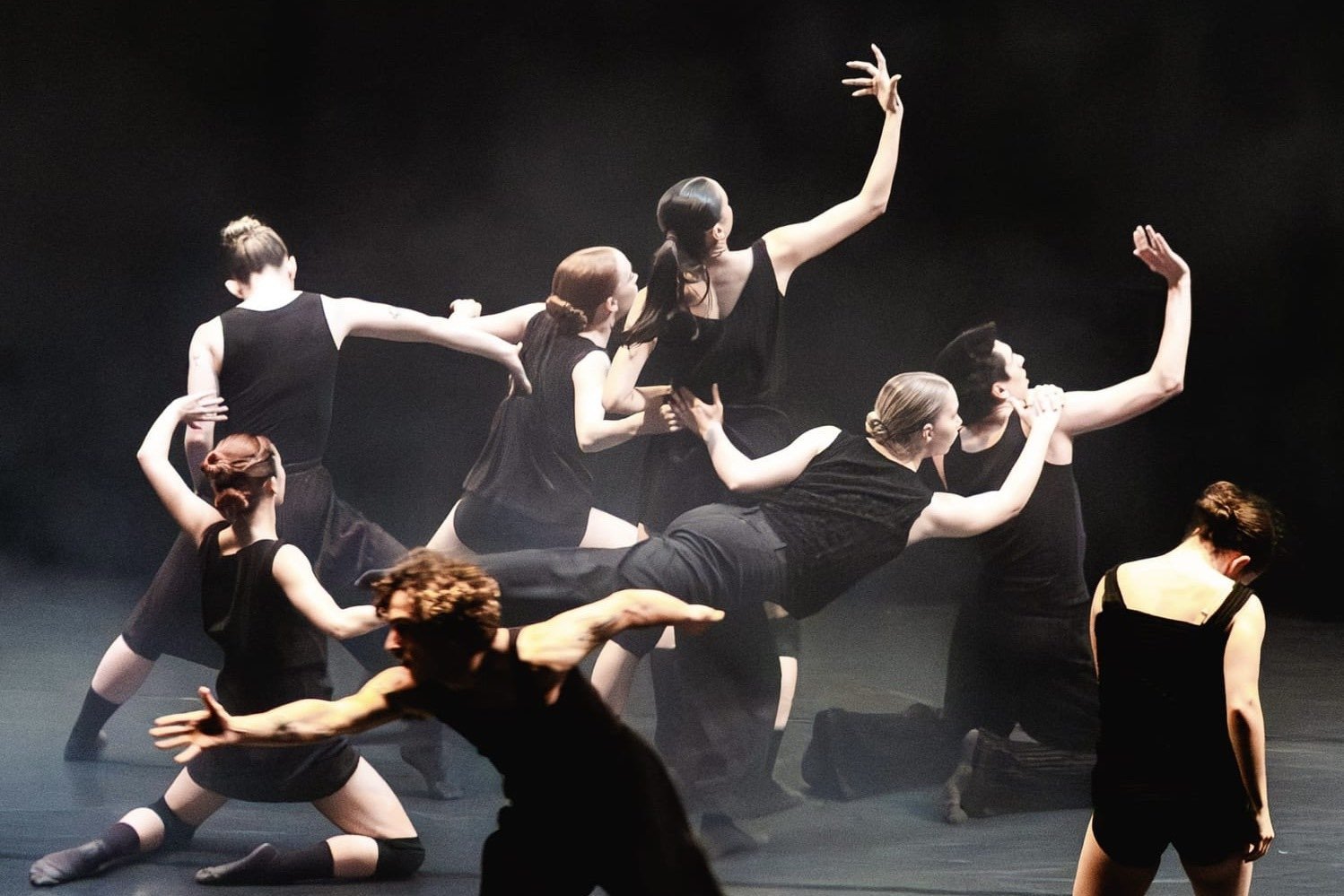
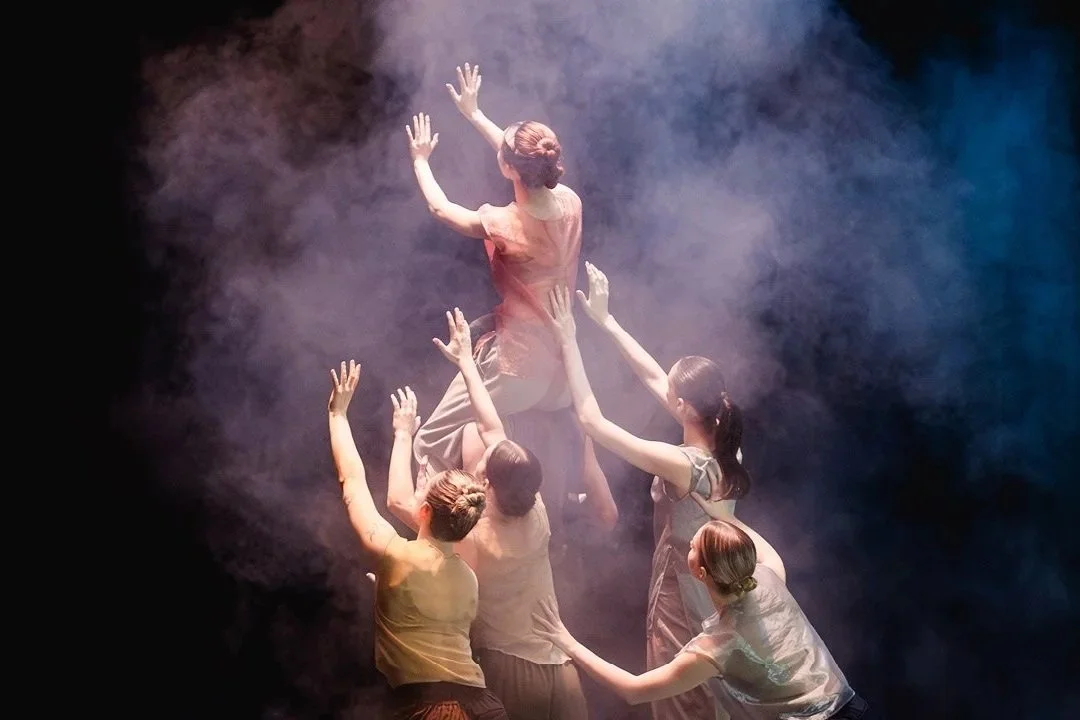
Choreographed by Mirko Guido, this highly experimental work starts with four dancers on the darkened stage, making eerie vocalizations and pawing at their faces—pulling their own mouths and eyes open. As their voices crescendo into a loud drone, the lights slowly rise through stage fog to reveal a sort of vast, surreal industrial wasteland.
Much of the rest of All That Remains features the dancers interacting with these distorted garbage monuments. It all makes for a haunting tableau, equal parts eco-apocalyptic and Sisyphean. One performer pulls a gigantic, crumpled blue tarp glacially across the back of the stage. Another drags a huge hunk of driftwood. And yet another pulls on a giant coiled yellow cord, stretching it across the floor.
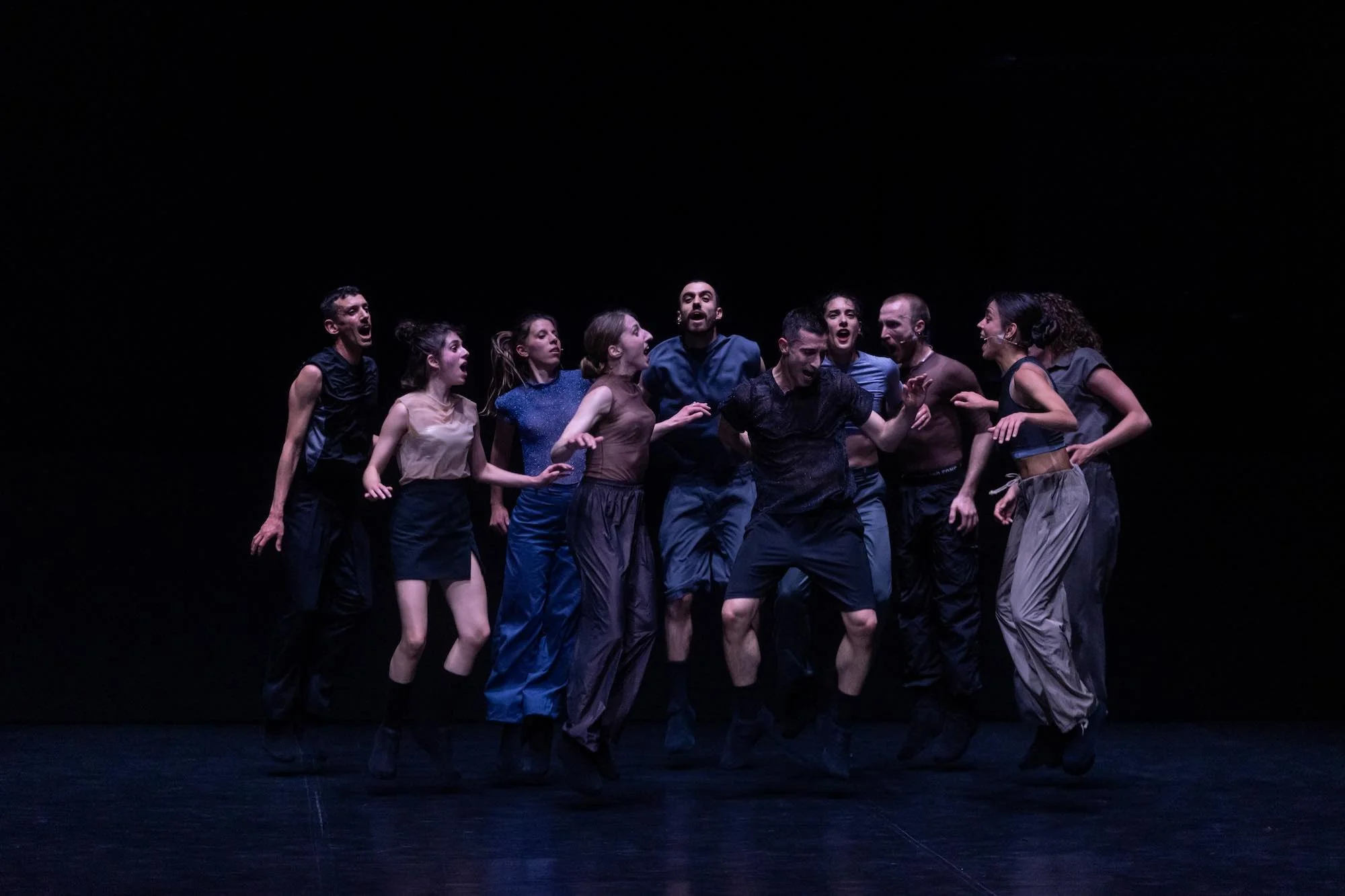
Sometimes the figures wrestle with the garbage, or struggle under its weight. Similarly, the soundtrack builds to a percussive, electro-acoustic cacophony, strobe lights flashing. At one point in that pulsing glare, a dancer wrestles a coiled “snake” of thick plastic tubing. Later, the action turns into a sort of end-of-the-world rave, set to club beats.
Above the humans and objects, a square of light glows ominously: the threat of technology? An abstract symbol for the ever-warming sun?
Overall, the humans are complicit in the piles of garbage around them, but they also fight the junk heaps—and eventually, over the arc of the piece, assert control over them. It’s a weird, thought-provoking trip—albeit with a lot of repeated ideas and improvisational-feeling dance sequences. The work may be best appreciated as a sound and art installation, for the desolate, fog-choked space it creates and the way bodies and these found sculptures move within it. Ultimately, it’s an unsettling dance between humans and “all that remains” when they one day disappear from Earth. ![]()

Janet Smith is founding partner and editorial director of Stir. She is an award-winning arts journalist who has spent more than two decades immersed in Vancouver’s dance, screen, design, theatre, music, opera, and gallery scenes. She sits on the Vancouver Film Critics’ Circle.
Related Articles

In a DanceHouse presentation, Guillaume Côté and Robert Lepage stage their tightly paced adaptation of Shakespeare’s story
At the Roundhouse, Little Room Productions’ inaugural piece draws on choreographer Isak Enquist’s lifelong experience in martial arts
The piece by Vision Impure, called being, comes to KW Studios courtesy of Kokoro Dance Theatre Society
The Dance Centre and Vancouver International Dance Festival coproduction concludes a triptych spanning over 15 years
Contemporary-art-like 27’52’”makes elaborate play with shadows and time, while Frontier reveals new narrative and thematic complexity
New Works copresents Isak Enquist's genre-defying fusion of martial arts and contemporary dance influences
Program features pieces by leading choreographers, including Anne Jung, Lukas Timulak, Rebecca Margolick, and Cyril Baldy
As a young dancer at Nederlands Dans Theater, the artistic director was in on the creation of both Jiří Kylián’s 27’52” and Crystal Pite’s Frontier
Based for decades at Western Front, long-time EDAM artistic director created more than 50 works and took part in hundreds of performances
With community partners Bard on the Beach Shakespeare Festival and Théâtre la Seizième, bold reinterpretation of the tragic play hits the stage
T’əl: The Wild Man of the Woods heralds an exciting new voice, while Carmina Burana strips the work down to its essence
The Dance Centre and O.Dela Arts present the piece that draws on the performers’ Indigenous ancestors
One-day gathering for artists, educators, and choreographers explores how leadership can be more responsive to the dance world
Rising Tla’amin choreographer Cameron sinkʷə Fraser-Monroe draws on a tale he heard growing up for a large-scale work that joins Carmina Burana on a double bill
Fun riffs on the classic include a moose-headed Bottom wearing buffalo plaid and an appearance by a royal couple
In this PuSh Fest, Music on Main, and Dance Centre premiere, humming songs, whispered words, and hypnotic movement bring a sense of serenity and connection to a chaotic world
With staging that evokes a Chicago jazz bar, the Dance Centre and PuSh Festival co-presentation draws on matrilineal fashion and line dancing
Program features Pite’s Frontier, a deep dive into the unknown, and Kylián’s 27’52”, an exploration of theoretical elements
In a riveting PuSh Festival and New Works copresentation, Belgium’s Cherish Menzo plays with repetition, chopped-and-screwed music, and flashing dental grillz
In DanceHouse and The Cultch co-presentation, the Hungarian company is full of flowing bodies and rippling fabric
In the deeply moving production, dancers embody the ancient tale of death and longing by tapping into their own experiences of tragedy