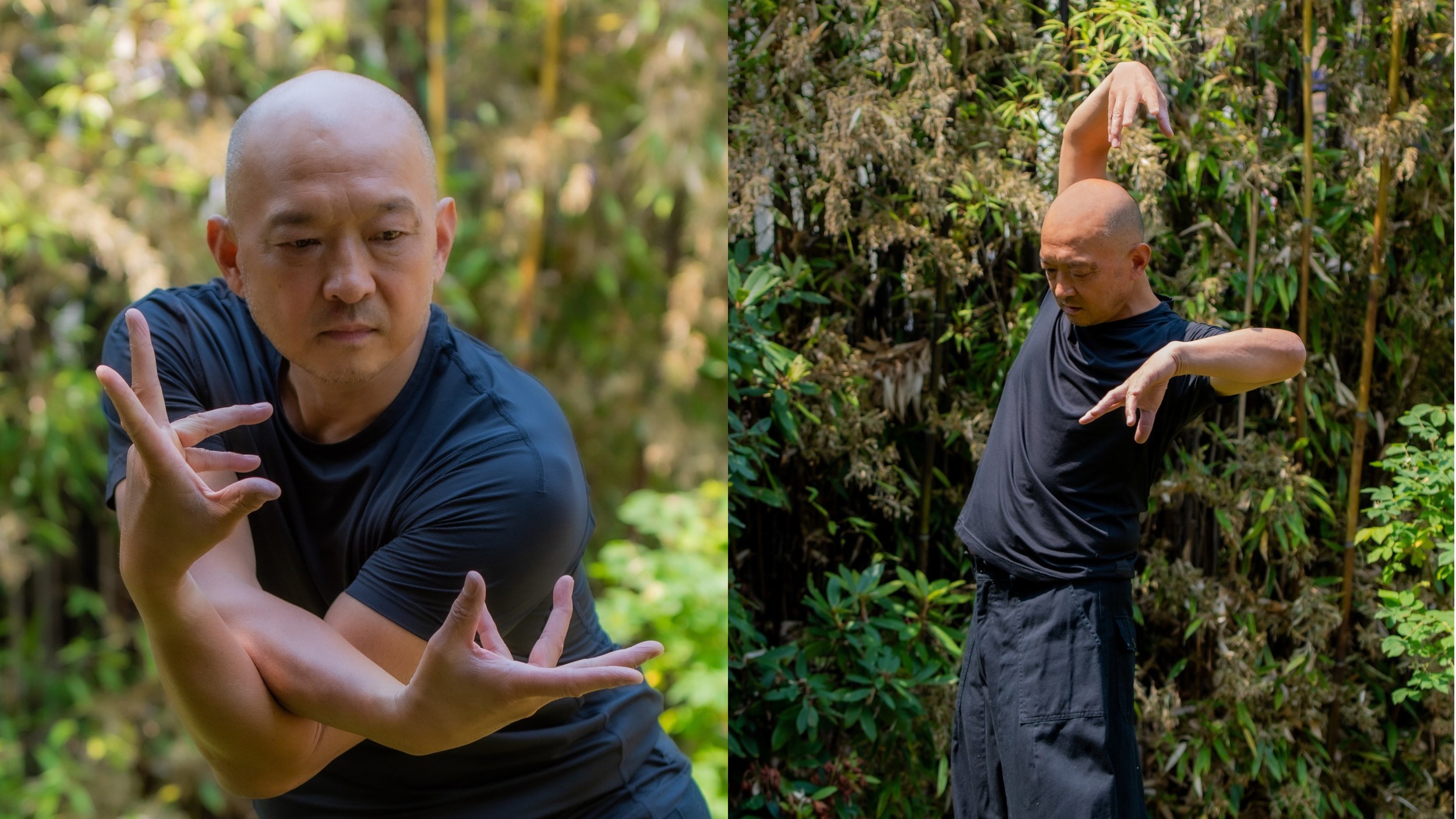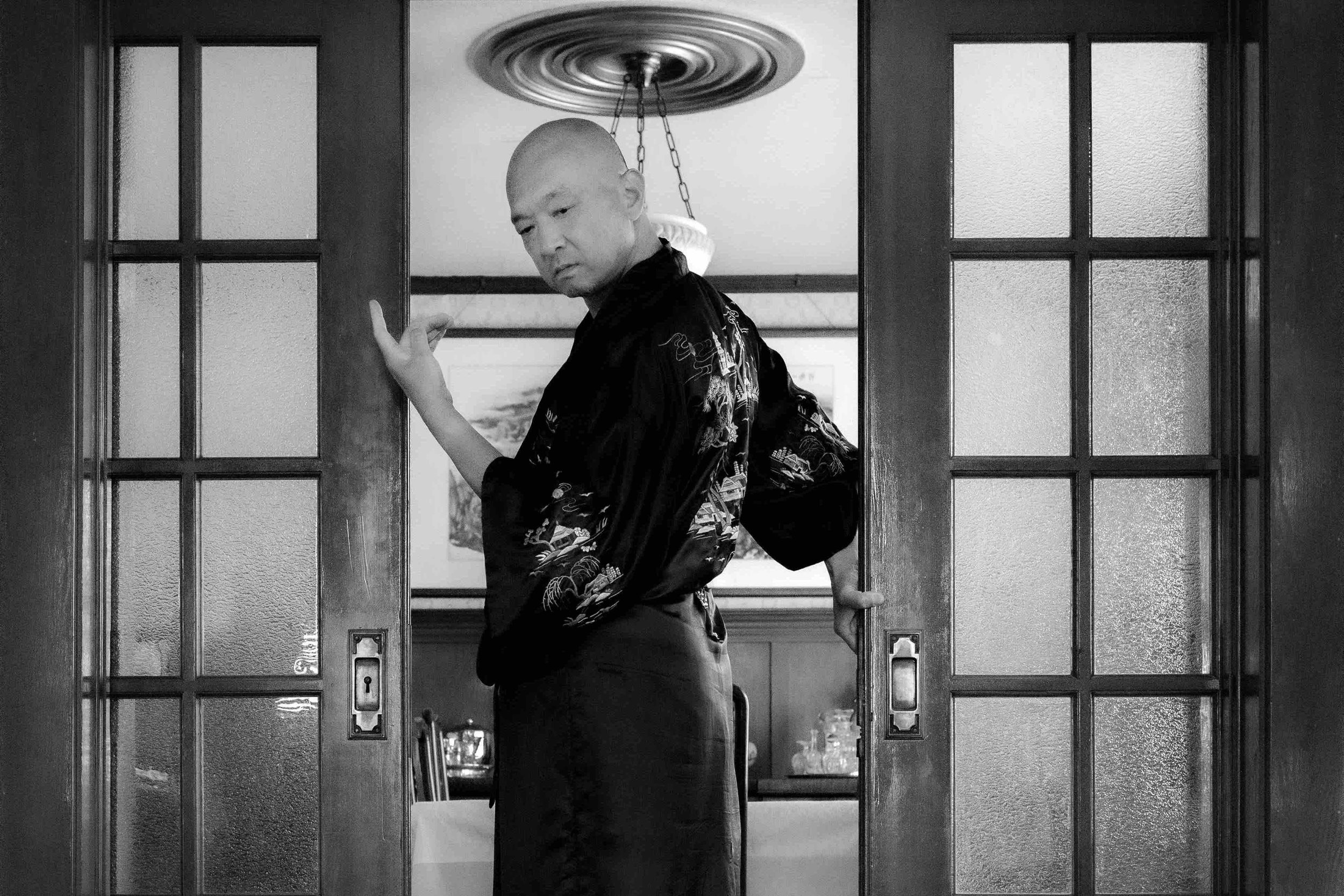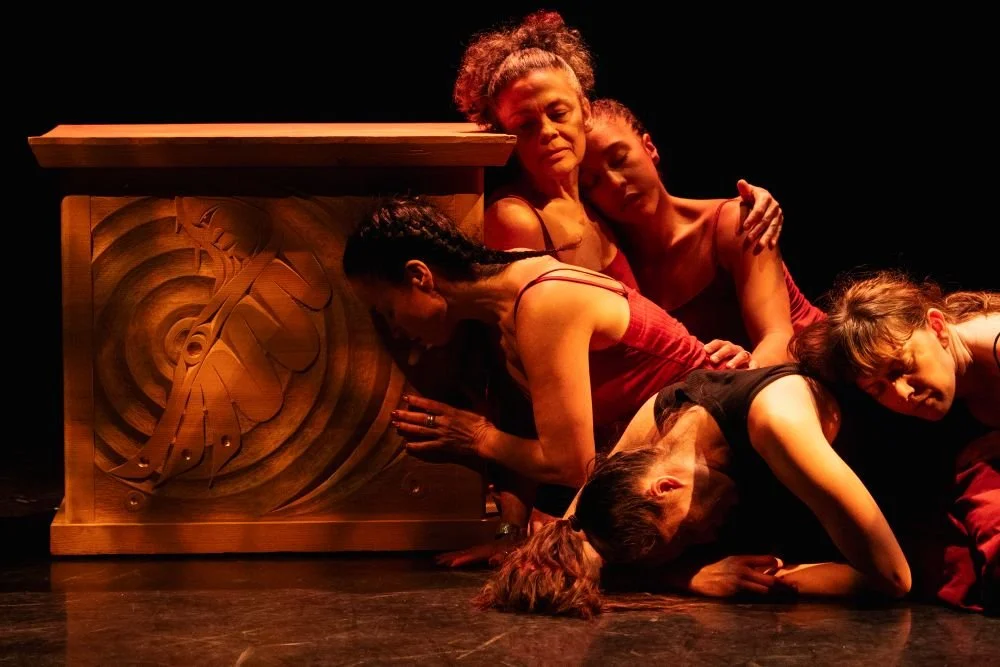
In Eternal Gestures, Alvin Erasga Tolentino embodies multifaceted relationships to the land
Co.ERASGA world premiere features commissions by three Indigenous women choreographers: Starr Muranko, Margaret Grenier, and Michelle Olson
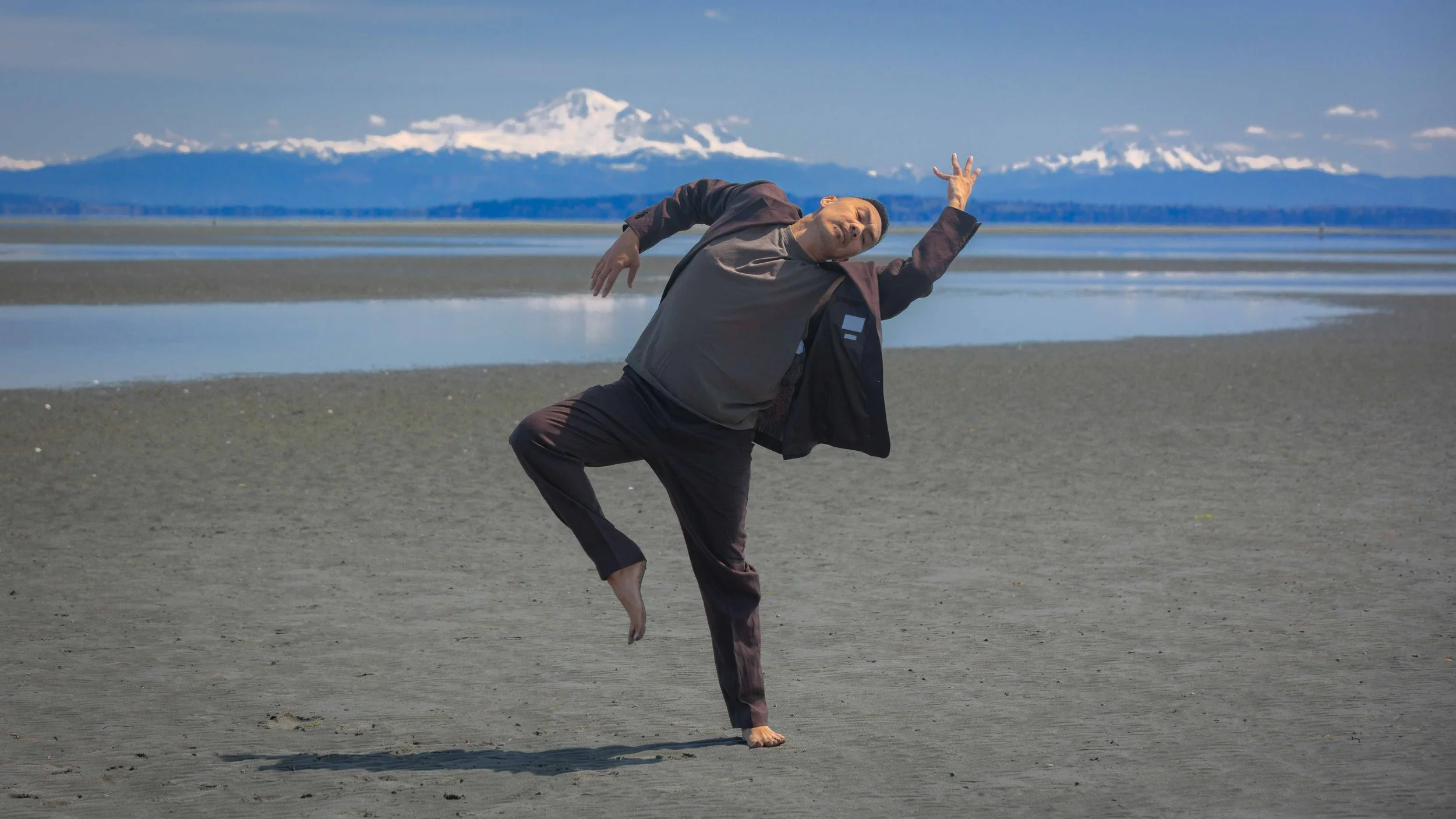
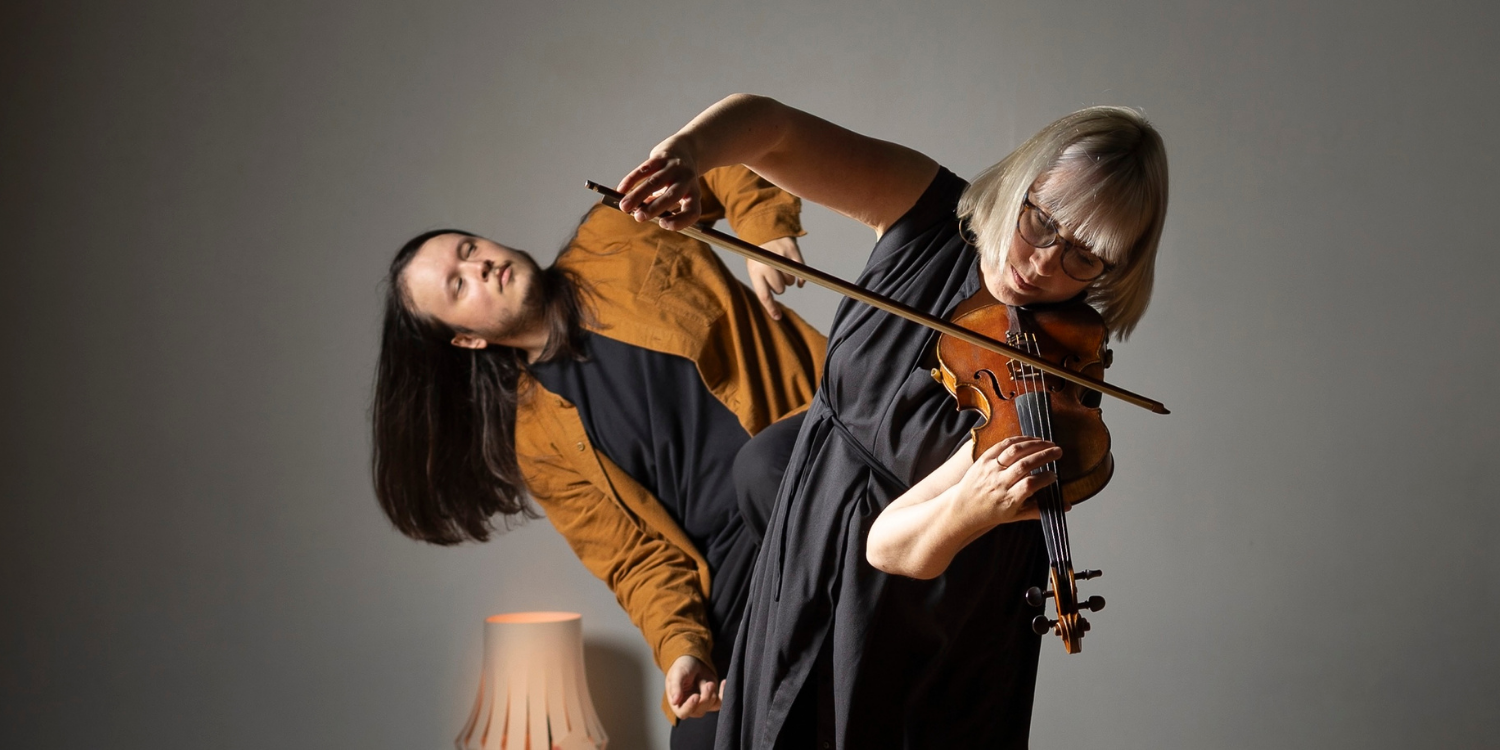
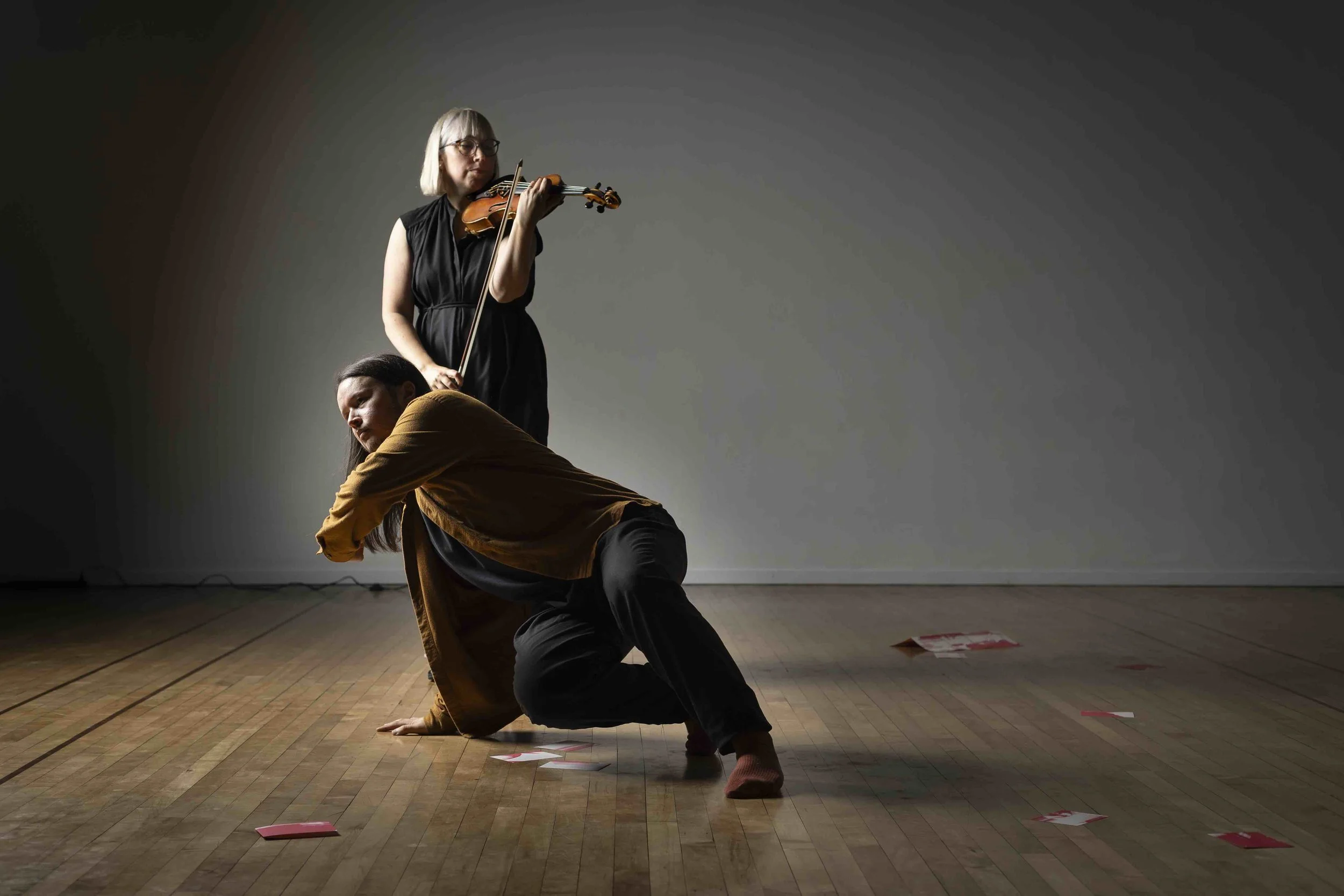
Alvin Erasga Tolentino in Eternal Gestures. Photo by Yasuhiro Okada
Co.ERASGA presents Eternal Gestures at the Scotiabank Dance Centre on October 9 and 10 at 8 pm, as part of The Dance Centre’s Global Dance Connections series
WHAT IS YOUR RELATIONSHIP to the land you live on? Did your ancestors grow up there? Are you a settler on unceded Indigenous territory? Do you harvest the land, treat it with care and respect, acknowledge the communities who nurtured it before you?
With Eternal Gestures, Co.ERASGA’s founding artistic director Alvin Erasga Tolentino is asking all of those questions—and answering them thoughtfully. The piece comprises three back-to-back solos commissioned respectively from Indigenous choreographers Starr Muranko, Margaret Grenier, and Michelle Olson. Tolentino has developed a meaningful connection with each of the women over the years, and Eternal Gestures is strengthening those bonds.
“The work’s been really quite a gift,” he tells Stir by Zoom before The Dance Centre presents its world premiere on October 9 and 10. “It’s really more than just making a dance and having a production—it’s also about going deep into each artist’s vision and their ways of understanding the landscape of where they are as contemporary artists for our time. I’m getting to know a little bit more about their history as artists, having this relationship towards Indigenous land-based practice and what that is for them, and how critical those conversations are right now for the arts.”
Tolentino first met his longtime friend Muranko, who is of mixed Moose Cree First Nation, German, and French ancestry, over two decades ago; he mentored her when she was a young dancer, and has since collaborated with her on several of her pieces, including the deeply personal Chapter 21. Given that this season is Co.ERASGA’s 25th anniversary, Tolentino felt it was fitting to reverse the pair’s usual roles and have Muranko choreograph a solo for him.
Muranko’s piece asks “What is home?” in two senses—what is one’s ancestral home, and what is one’s current location-based home. Tolentino can approach that inquiry from his own angle, as he was born in Manila, Philippines, and immigrated to Canada in 1983. He draws on what it means to be a migrant visitor and settler living on Coast Salish territories.
Muranko is co-artistic director of Raven Spirit Dance, of which Olson is artistic director. Olson, who is a member of Yukon’s Tr’ondëk Hwëch’in First Nation, choreographed a solo for Tolentino that takes on a more sombre tone.
“It’s asking about the hardships that one person struggles with in relationship with the land and with the environment—that this land has been taken, this land was colonized,” Tolentino says. “And my body is colonized in that space. So the struggle is there. But how do I demand for my rights and the rights of the Indigenous community, that this is their home, this is their land?”
In Grenier’s solo, meanwhile, Tolentino embodies the responsibility of a land acknowledgement. The Dancers of Damelahamid executive and artistic director is of Gitxsan and Cree ancestry, and brings a sense of celebration to this new piece, drawing on the idea that we are one with the environment.
The score for Grenier’s piece features instrumentals by another of Tolentino’s longtime collaborators, French composer Emmanuel Mailly, who was behind the sound design for Co.ERASGA’s heartbreaking human-consumption–driven solo Accumulation. It also features vocals by the choreographer’s daughter, Raven Grenier, who recently composed and sang a score in Gitxsanimx for the Dancers of Damelahamid’s Raven Mother.
Tolentino has been developing Eternal Gestures since spring 2024.
“I work in phases with one choreographer, the next choreographer, then the third choreographer,” he says. “So I get to have two weeks each time for each choreographer—and we just be in the studio. We have conversations, we play, we talk about our life histories. And that is kind of the rigour where we begin to put things in motion and movements into the body, and then create a choreographic palette.”
An interesting aspect of Eternal Gestures is that Tolentino will be performing it indoors at the Scotiabank Dance Centre; but he says the structure doesn’t inhibit him from connecting to the land. The piece also incorporates text and video elements, and props like a tree branch and rice, to enhance its themes.
“Although there is a theatrical sensation—there’s the stage, there’s light—deep down is the land where it sits,” Tolentino says. “I am dancing on the land, it’s not just this theatre. So it’s an embodied sensation that I need to confront in the deliverance of the performance.”
In all, Eternal Gestures is Tolentino’s way of giving back to the artistic community that has nurtured Co.ERASGA since its inception in 2000. Perhaps most importantly, it continues his lifelong commitment to addressing the ongoing environmental crisis through his practice.
“We’re all visitors on this land,” he says. “And so it’s asking the question of what’s our responsibility as individuals to recognize that this land is here? We walk with it, we acknowledge it, we embody it, we’re part of it. So how do we keep it going?”
Eternal Gestures feels like a good place to start. 

Related Articles