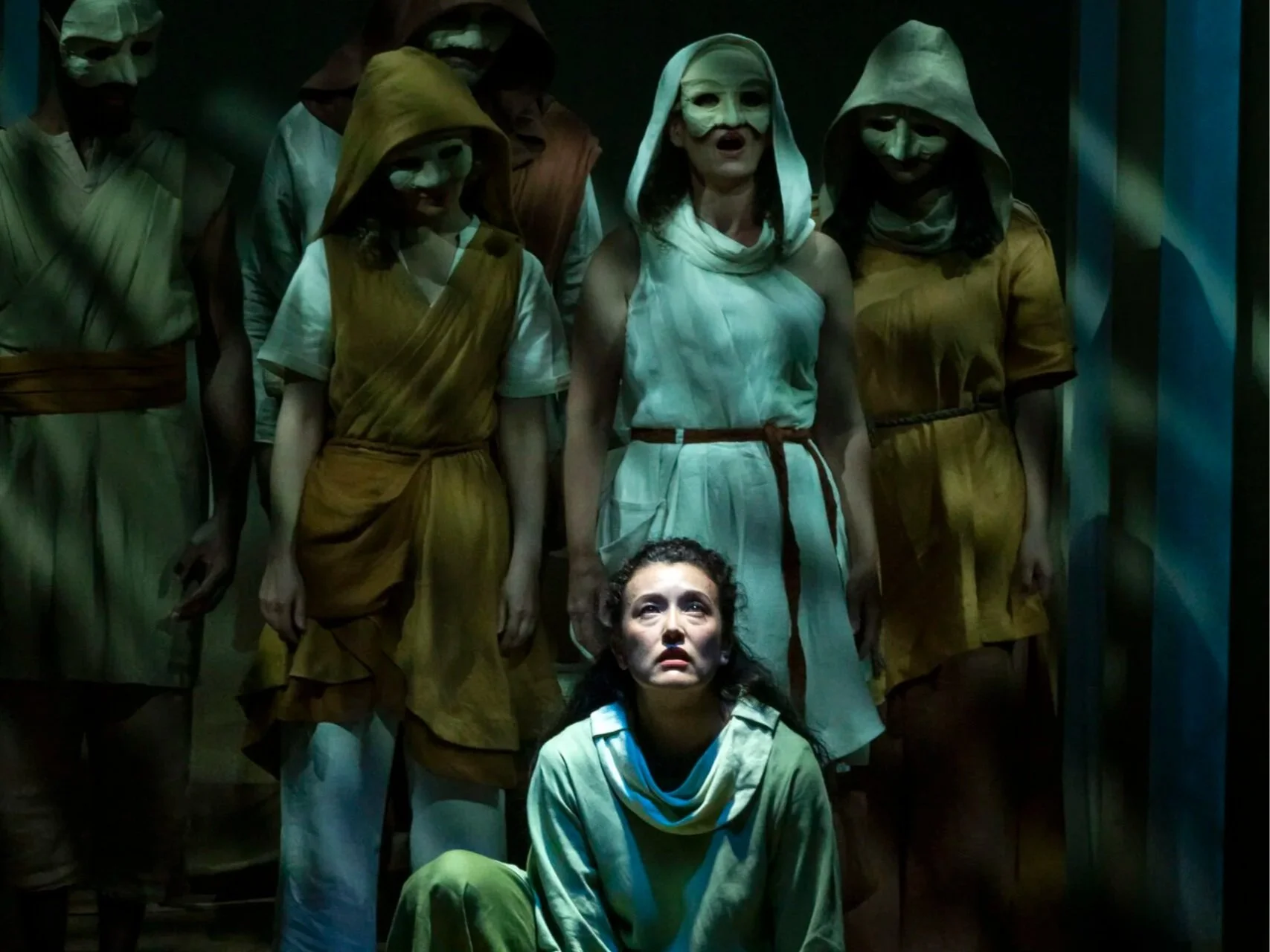
Vacant Lot sees a married couple contemplate their fragile existence in the universe
At the Firehall Arts Centre, Hiromoto Ida’s production based on the Japanese play Sarachi weaves together elements of contemporary dance and theatre
Vacant Lot. Photo by Carlo Alcos
The Firehall Arts Centre presents Vacant Lot from October 22 to 25
WHEN HIROMOTO IDA was seven years old, his grandfather passed away. The dance and theatre artist—who’s now established in Nelson, B.C.—was living with his family in Japan at the time, where funerals are quite intimate. He vividly remembers the rituals that took place.
Ida’s grandfather was laid to rest in a coffin and brought to the family home for an otsuya, or wake, so his loved ones could spend a final night with him. The following day, there was a kokubetsu-shiki, or formal funeral ceremony, during which the family laid flowers on the patriarch’s body and placed the lid on his coffin. Then came the kasou, or cremation.
Speaking to Stir by phone, Ida recalls what it was like to be a young boy staring at the crematorium during the final moments of his grandfather’s funeral.
“There was a chimney, and you could see that smoke come up,” he says. “And I remember my uncle said, ‘That’s grandpa’s body burning.’ And I still remember that feeling. Then, when my grandma passed away when I was 17, it was just before the end of high school….That hit more strongly about where we come from and then when we die, after dying, that’s it. And that changed my life. Those things really left me in a deep, deep place.”
When Ida watched a DVD of contemporary Japanese theatre artist Shogo Ota’s play Sarachi for the first time, all those profound existential thoughts came rushing back to him. The avant-garde drama is about a middle-aged couple who are forced to acknowledge the dissatisfaction that has crept into their lives when they visit the site of their just-demolished home.
“The wife says one line where totally, every time I read it, it just makes me cry,” Ida says. “Because I can feel her loneliness about how everything is going to be gone—your house is, of course, material. It’s going to go, right, and everybody knows.”
Ida has drawn on the plot of Sarachi, as well as his own experiences with love and loss, for his new production Vacant Lot. Weaving together contemporary dance and theatrical components, the story centres on a long-married couple who visit the vacant lot where their family home once stood. As they reminisce on all the memories they made there with their kids, the two realize how truly fragile life is—and how connection with others is the backbone of their existence.
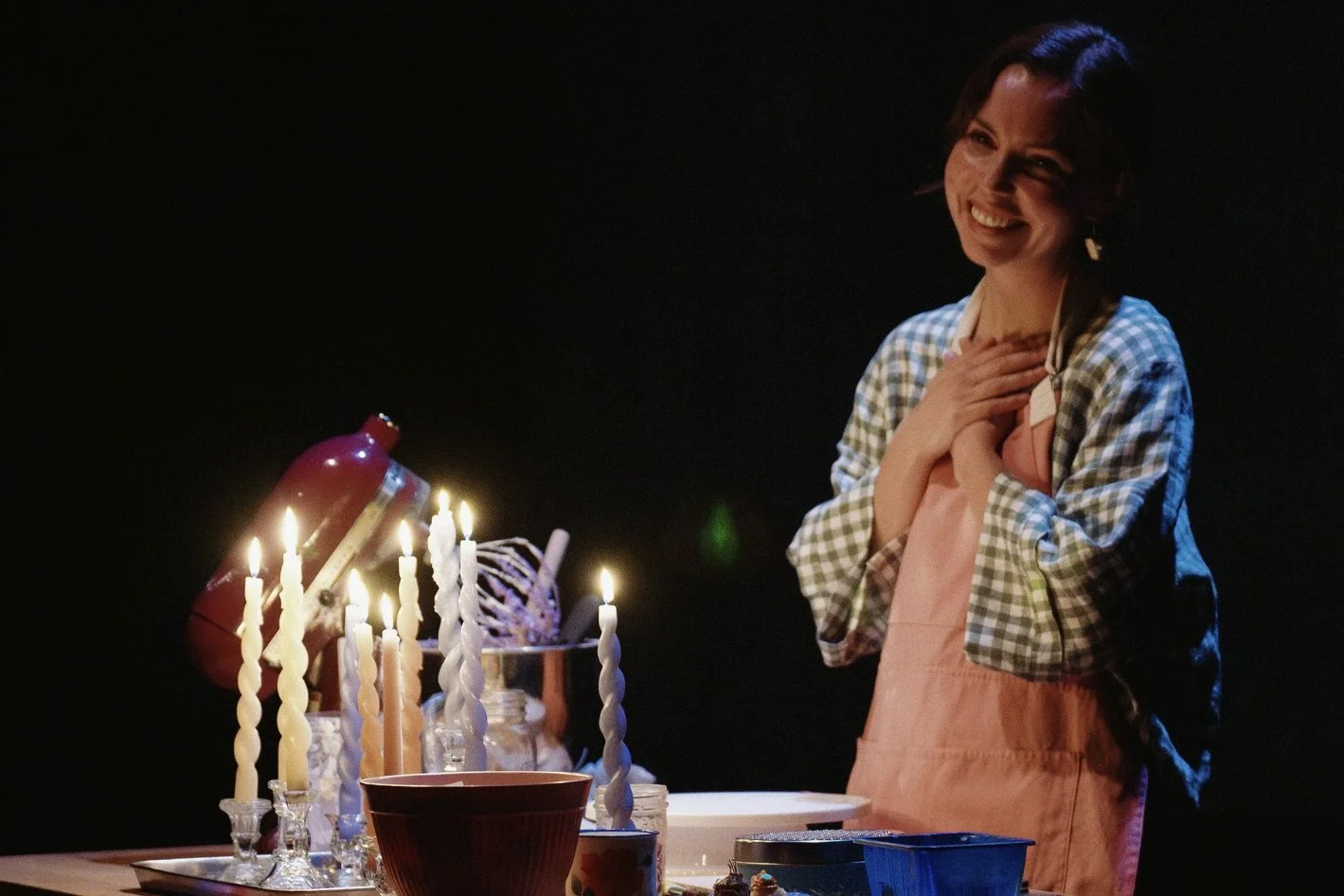
Vacant Lot will be at the Firehall Arts Centre from October 22 to 25, with Ida starring as the husband alongside Lindsay Clague as the wife. Movement is the foundation of Vacant Lot, but the piece also includes dialogue in English and Japanese, with translated surtitles incorporated into the projections designed by Sharon Huizinga.
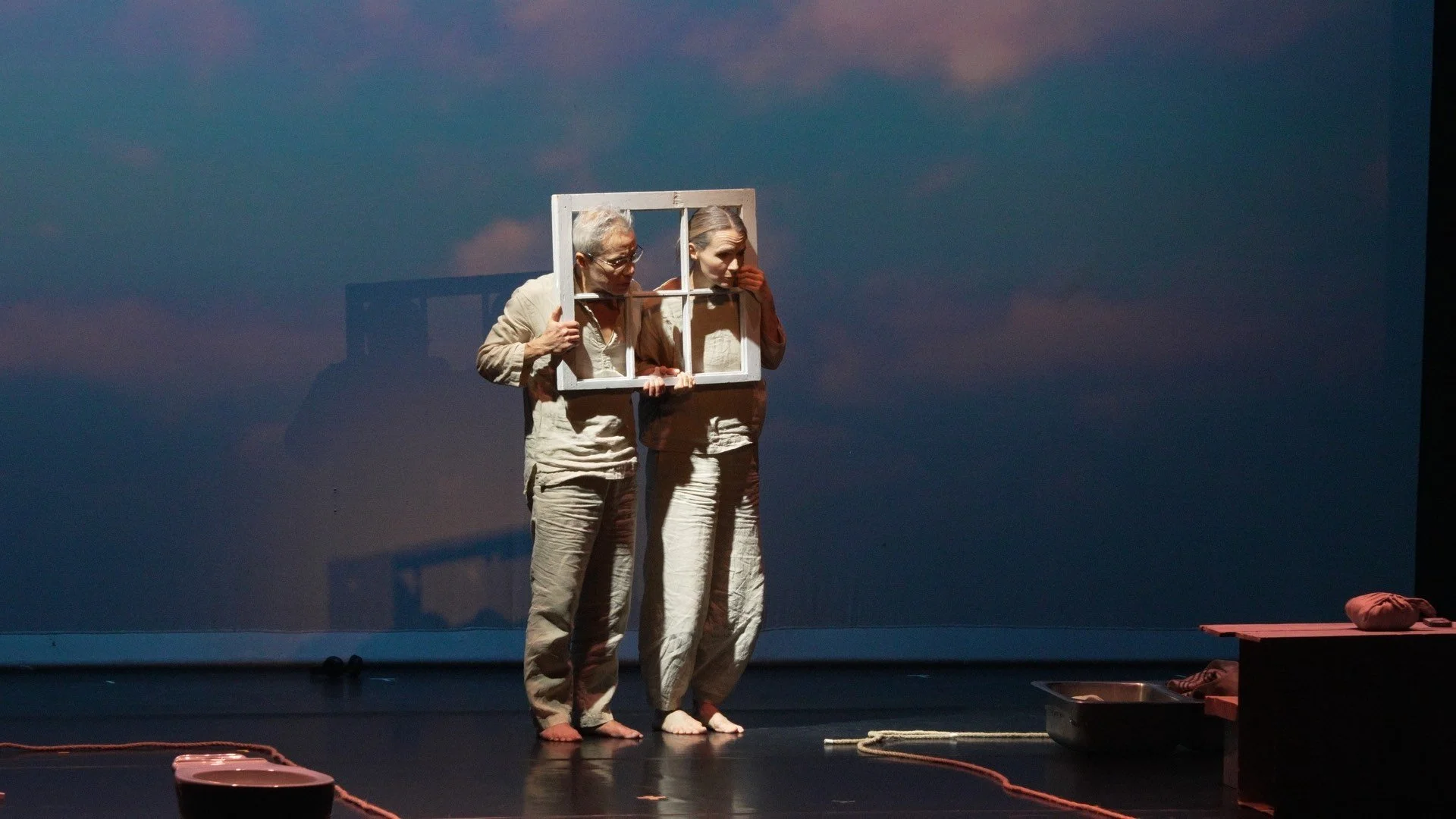
Hiromoto Ida (left) and Lindsay Clague in Vacant Lot. Photo by Carlo Alcos
Ida studied dance and performance as a young artist in Tokyo and moved to Vancouver in 1987. He joined the Karen Jamieson Dance Company soon after, with which he performed at events like Dancing on the Edge and Ottawa’s Canada Dance Festival. Ida is also an experienced actor and filmmaker; he won a Screen Actors Guild Award this year for best ensemble performance with his portrayal of Japanese warlord Lord Kiyama in Shōgun. He has been based in Nelson since 2000 and runs his own company, Ichigo-Ichieh New Theatre.
That well-rounded background in the performing arts informs his approach to Vacant Lot. Ida says he’s always thinking about what defines contemporary dance.
“I guess dance has a rhythm, but contemporary is totally different, right?” he muses. “It’s all freeform. So for extreme, if you don’t dance and you’re standing on the stage, it could be contemporary dance. I think that’s the dance of stillness, right? So I am pretty free from those ideas.”
Pedestrian activities like walking, sleeping, and eating are all incorporated into the piece as Ida and Clague interact with bits of their old home that are scattered around the stage, from a window frame to a toilet.
“Every movement has a reason,” Ida says. “So it’s not just like she’s swinging her arm because this is dance, because it’s the choreography. I always want to have why she feels like swinging her arm, what must make her want to swing her arm—a reason. So every connection has to make sense for me.”
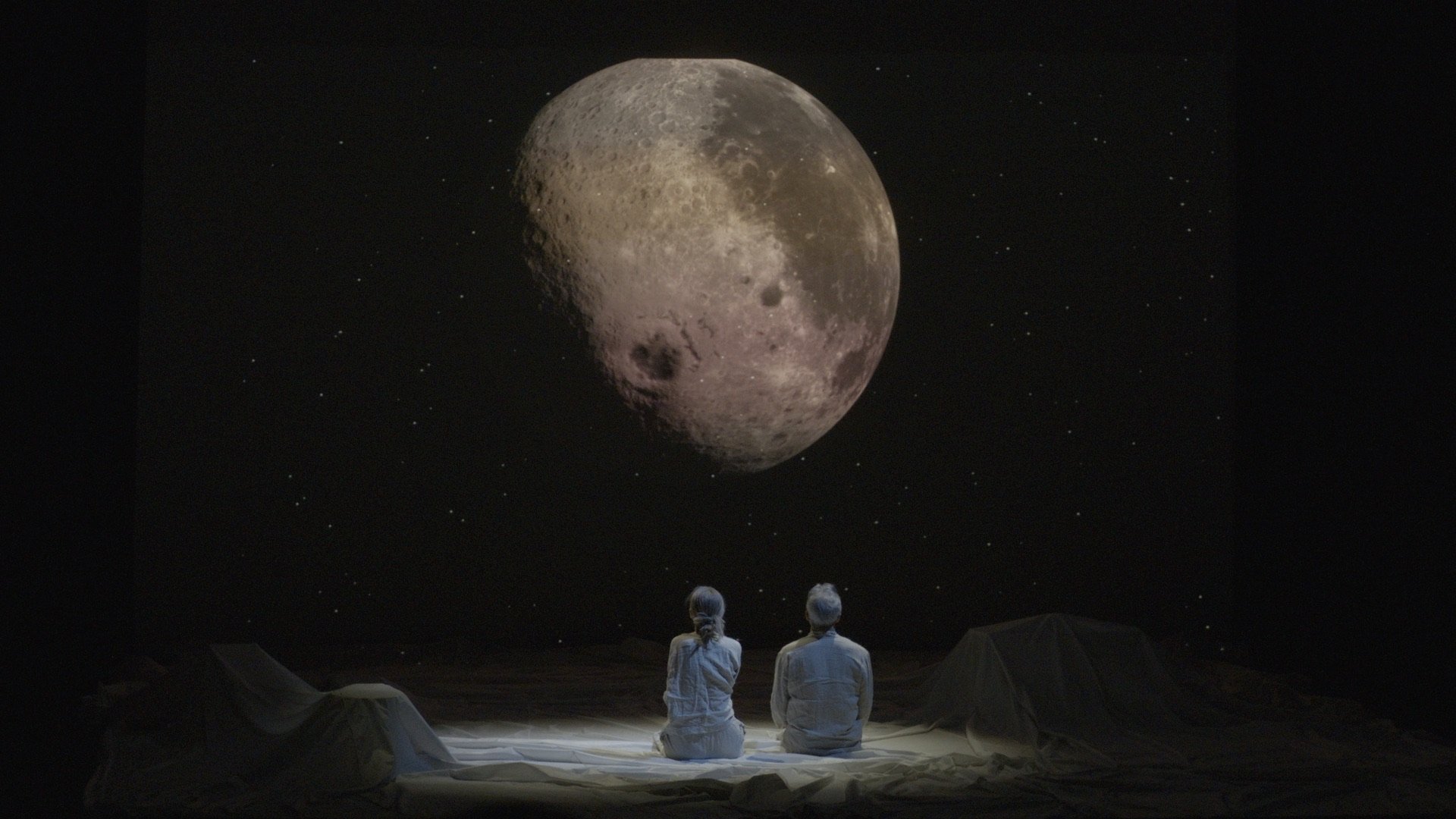
Vacant Lot features a score by Ida’s long-time collaborator John Tucker. It’s a careful composition of ambient music and nature noises, like crickets chirping, with moments of silence throughout so there’s room for dialogue. In one instance, a larger-than-life moon is projected onscreen while an all-encompassing thrum echoes over the speakers, which Ida likens to the “sound of the universe”.
All those components allow the couple’s connection to thrive. While the piece is layered with sombre meaning, ultimately it is lighthearted—jubilant, even—in many moments, as the husband and wife dance their way through their memories. Just as Ida once contemplated death and the afterlife as a young boy, audiences will see this couple consider their own existences onstage.
“They are really lonely in this universe, but they are holding together, trying to find out how we could fight back, you know?” Ida says. “In this whole universe, they’re like, ‘I don’t know how long I’m gonna keep going without you. We are just little pieces of dust—the wind blows, then we’re gone.’” 

Related Articles