Theatre reviews: Two plays invite viewers into the history-steeped Roedde House Museum
Christmas With the Marches welcomes viewers into the famous sisters’ home for the holidays, while A Christmas Carol animates the Victorian setting with coloured lights and projections
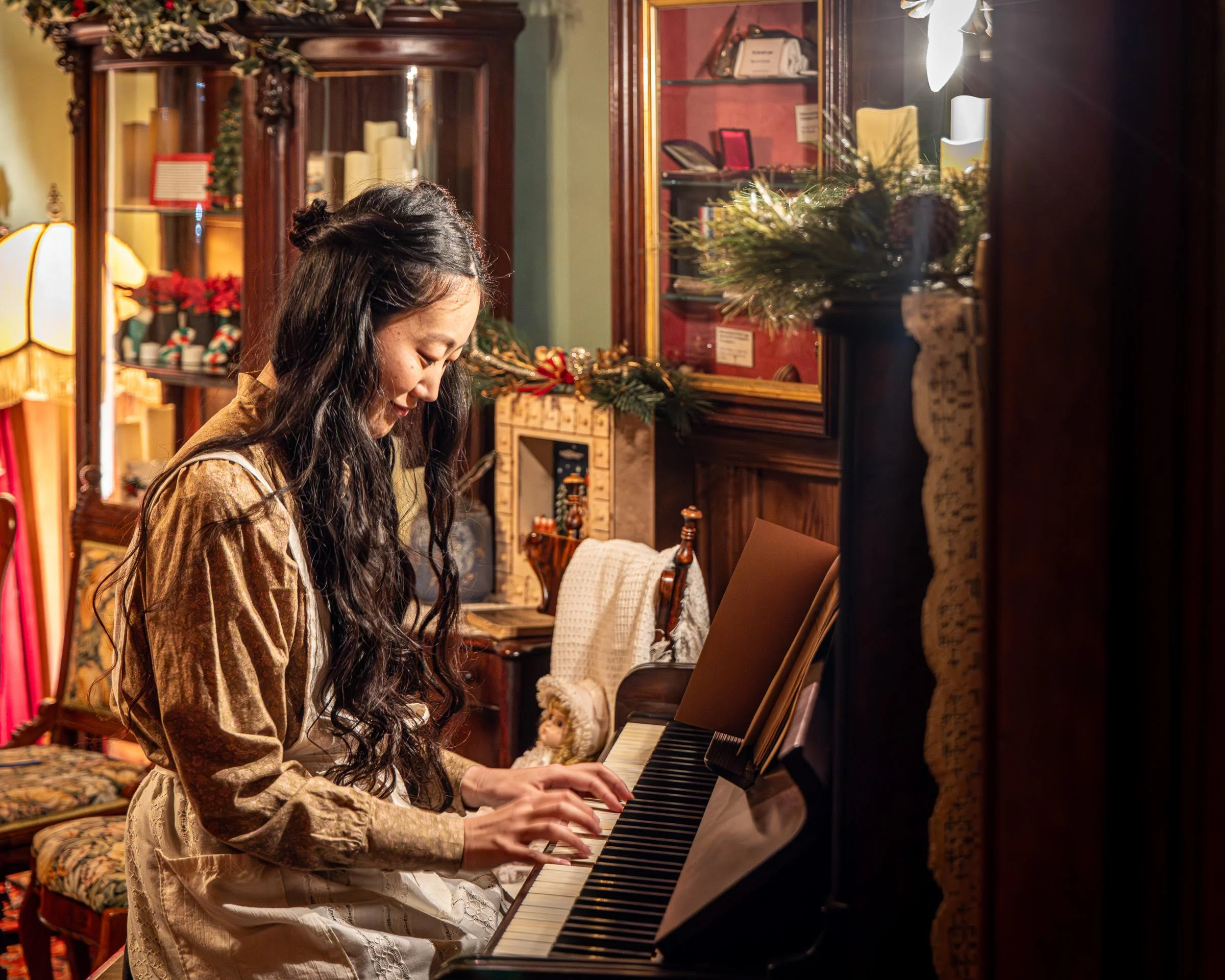
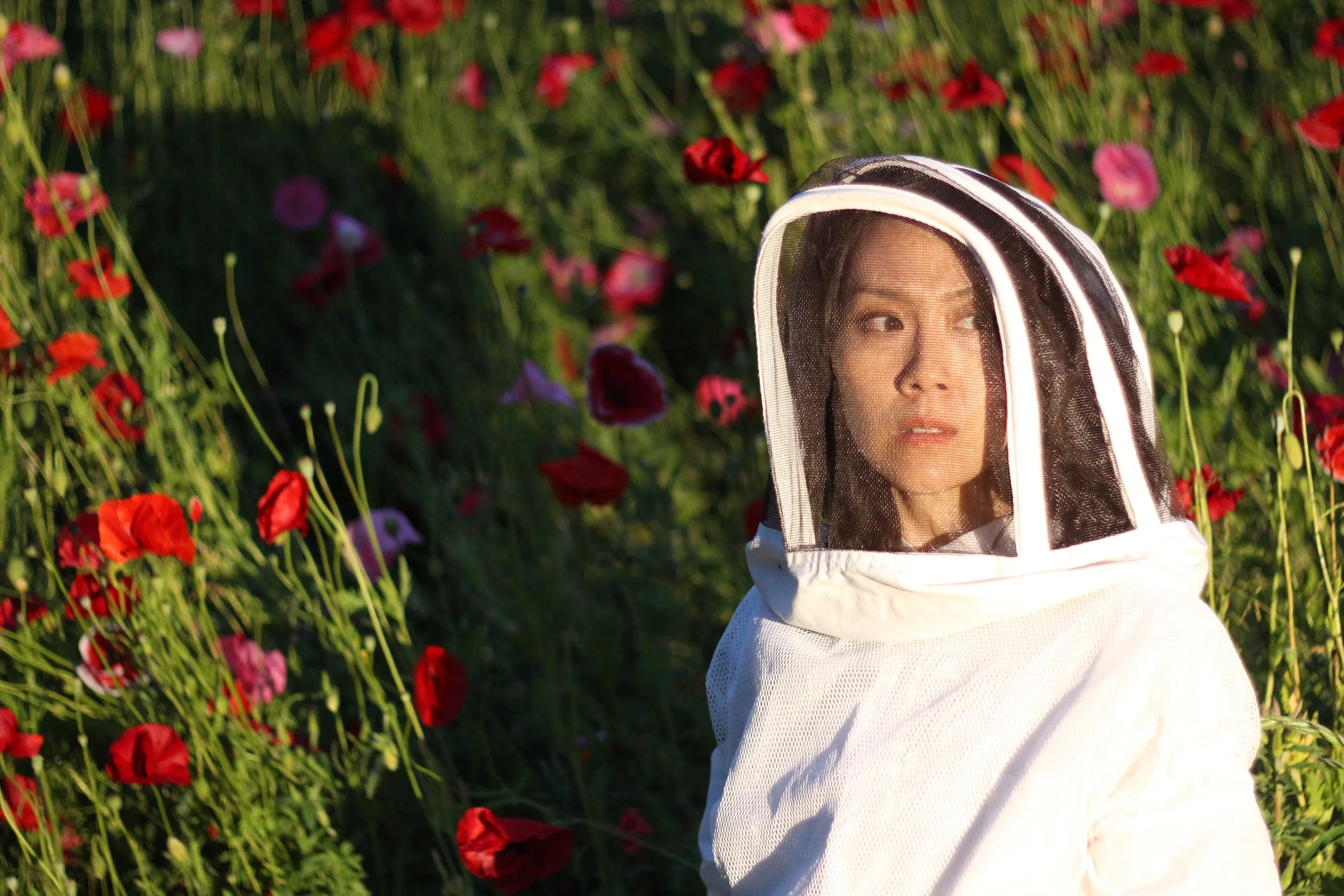
Ayako Karasawa in Christmas With the Marches at the Roedde House Museum. Photo by Len Grinke
Hidden Stages Productions presents Christmas With the Marches and A Christmas Carol at the Roedde House Museum to December 23
HAVE YOU EVER arrived somewhere else entirely for the holidays, suddenly inside another household’s routines? Maybe it comes with a new relationship and its new obligations, or maybe it’s a lonelier moment that lands you, like a weary traveller, in welcoming but unfamiliar territory.
It comes with a weird mix of distance and privilege, the sense of being allowed to observe and take part in another family without fully belonging. And still, especially at this time of year, there’s something special about being invited into someone else’s happiness.
The Roedde House Museum is no stranger to extending that kind of invitation. This winter, the Victorian heritage home hosts two immersive productions, Christmas With the Marches and A Christmas Carol, presented as separate, bookable experiences on select evenings. Each begins the same way: by ringing the doorbell and stepping inside. Built in 1893 and full of period-specific domestic detail, the house is an especially fitting setting for both 19th-century stories.
Named for the family in Louisa May Alcott’s Little Women, Christmas With the Marches, produced by Hidden Stages Productions, feels less like a staging of that beloved story about four sisters than like being dropped into the middle of a busy holiday gathering. The audience moves freely through the house as scenes unfold around them: conversations overlap, the second-eldest daughter, Jo, stages her plays, and letters from the girls’ father arrive. Amid it all, gifts are exchanged, popcorn garlands are strung, and paper ornaments are made.
The March sisters brush past you, or you brush past them, moving from room to room while they're talking, laughing, and engaging in a more-than-occasional squabble. It can get disorienting, but it stays pretty enveloping.
Certain rooms pull focus. The parlour does this most reliably. (A tip: snag a seat there at some point if you can!) Scenes tend to gather around the upright piano Beth returns to, with carols breaking out and guests recruited into the singing.
Elsewhere, character reveals happen on the move. As Meg, Paulina Pino-Rubio displays maternal steadiness in passing words of advice. Abrielle Dumansky’s Amy shows sharp comic timing as she stomps around the house, annoyed at being treated like a child. Ainslee Dalzell gives Jo an easy, creative authority that pulls the others along, while Ayako Karasawa’s Beth radiates a gentler presence, happiest when the house is at its most crowded.
When the show does mark time between major plot points more explicitly, with brief red-light cues signalling transitions, it’s noticeable mostly because it breaks from the otherwise intuitive rhythm the production leans into.
The most memorable moment for me came in the middle of the bustle. I ended up in the kitchen with a small cluster of attendees, gathered around Amy as she worked on a holiday letter and asked each of us who we’d write to. People answered earnestly. I did too.
The ensemble is uniformly strong, even as scenes overlap and attention splinters. A special mention goes to Brooke Viegut, the show’s creative director, who stepped into the role of matriarch Marmee at the last minute and still managed to land a grounded presence. Christmas With the Marches remains loose about when our own presence matters and when it slips back into the background. It’s not especially believable that we’d trail the sisters upstairs to overhear every secret—Meg telling Jo the news of her engagement, for example—but that hardly matters, because the house and the sisters’ eventful lives keep moving regardless, and you find yourself wanting to move alongside them.
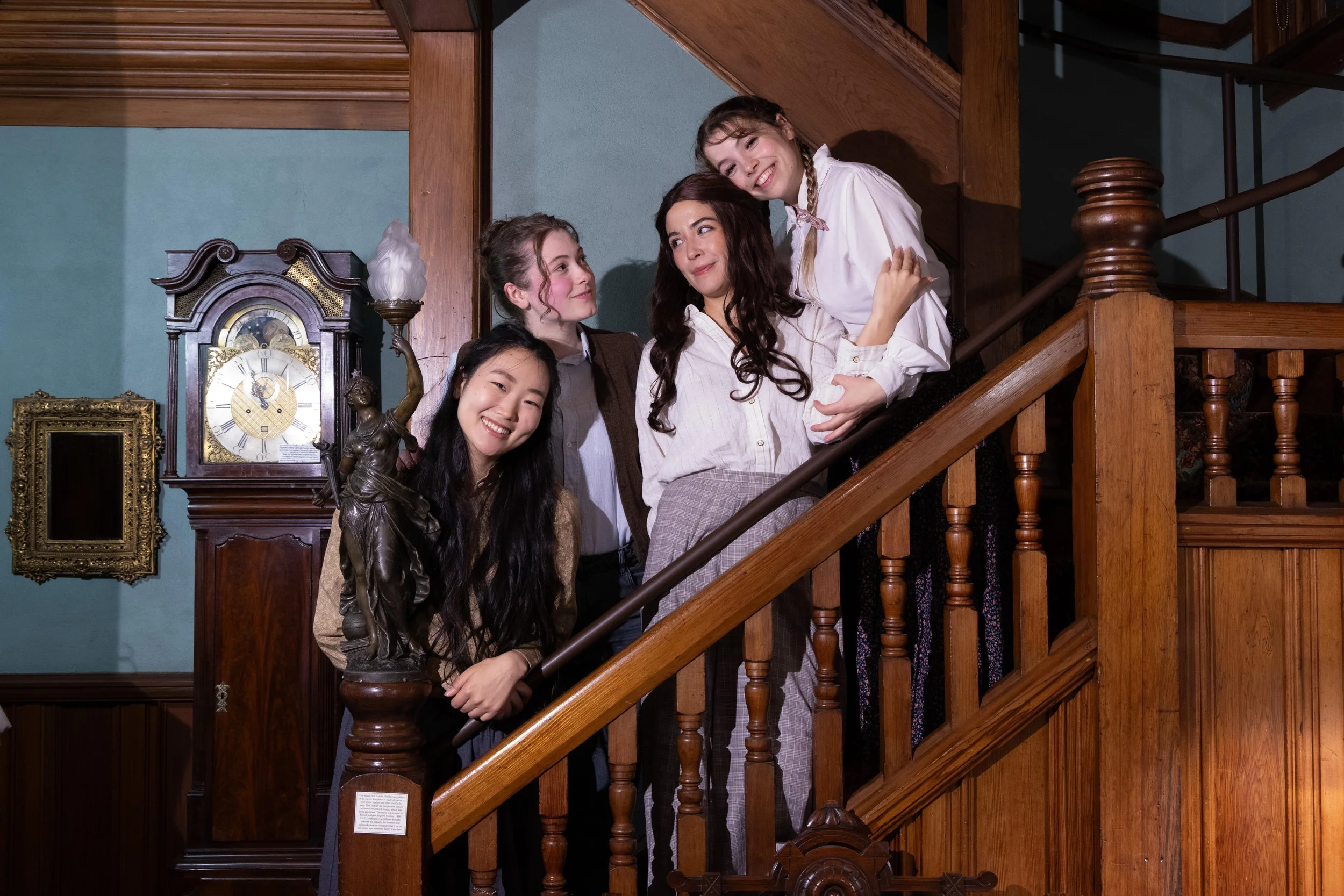
(From left) Ayako Karasawa, Ainslee Dalzell, Paulina Pino-Rubio, and Abrielle Dumansky in Christmas With the Marches. Photo by Len Grinke
A Christmas Carol operates differently. In Charles Dickens’s classic, Ebenezer Scrooge is a guest of sorts, unseen and uninvited, wandering through other people’s Christmases, present but unable to take part.
Back at the heritage home for a second run, the production by Grinke Creative and Famous Artists extends that logic to the audience. Where Christmas With the Marches is loose and self-directed, A Christmas Carol is guided rather than social, moving you through the rooms at a slower, more deliberate pace. The story unfolds mostly through sound; it feels closer to a radio play than a staged performance, with visual cues punctuating key narrative moments.
The effect is eerie. Compared with the warmth of Christmas With the Marches, the atmosphere in the house here feels stripped of comfort, its familiar details—the ticking grandfather clock, drawn lace curtains, creaking floors—taking on a stranger charge under the Lynchian wash of coloured lights and projections.
Because the experience is automated, the house asserts itself differently. You’re more aware of where you are, and the stillness of the rooms does as much work as the visuals layered on top of them, if not more.
If Christmas With the Marches feels like following your most fun relatives around during the holidays, this version of Dickens is closer to listening as an elderly family member retells a story you already know by heart.
There’s a melancholy here, and a comfort too, in these evenings. Inside the Victorian house, there’s room for lively voices and for ghosts, but mostly for the familiar feeling of gatherings returning, again and again, to the same walls. 

Angie Rico wrote this review as part of Page Turn, a professional development network for emerging arts writers, funded by the Canada Council for the Arts and administered by Neworld Theatre.
Related Articles