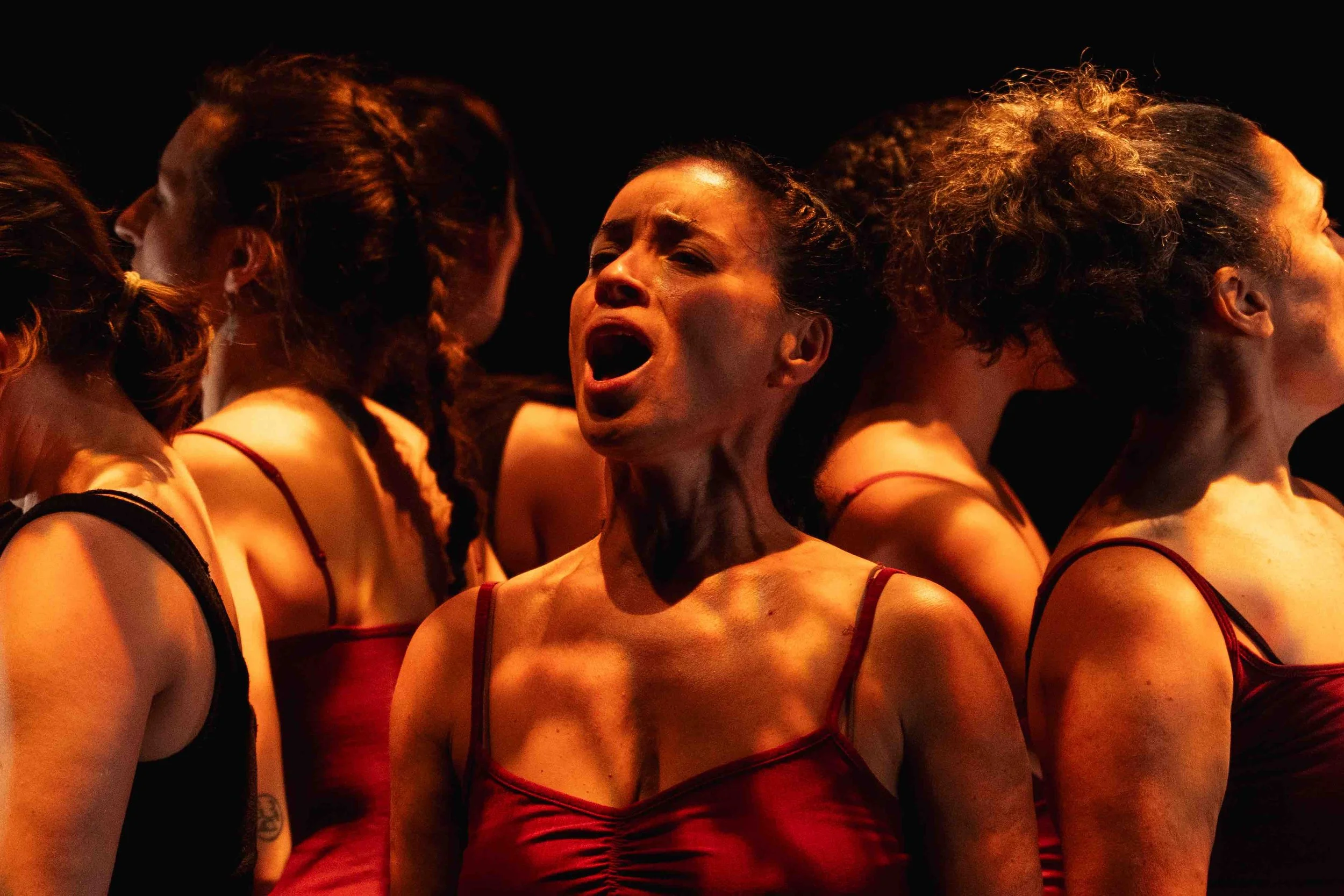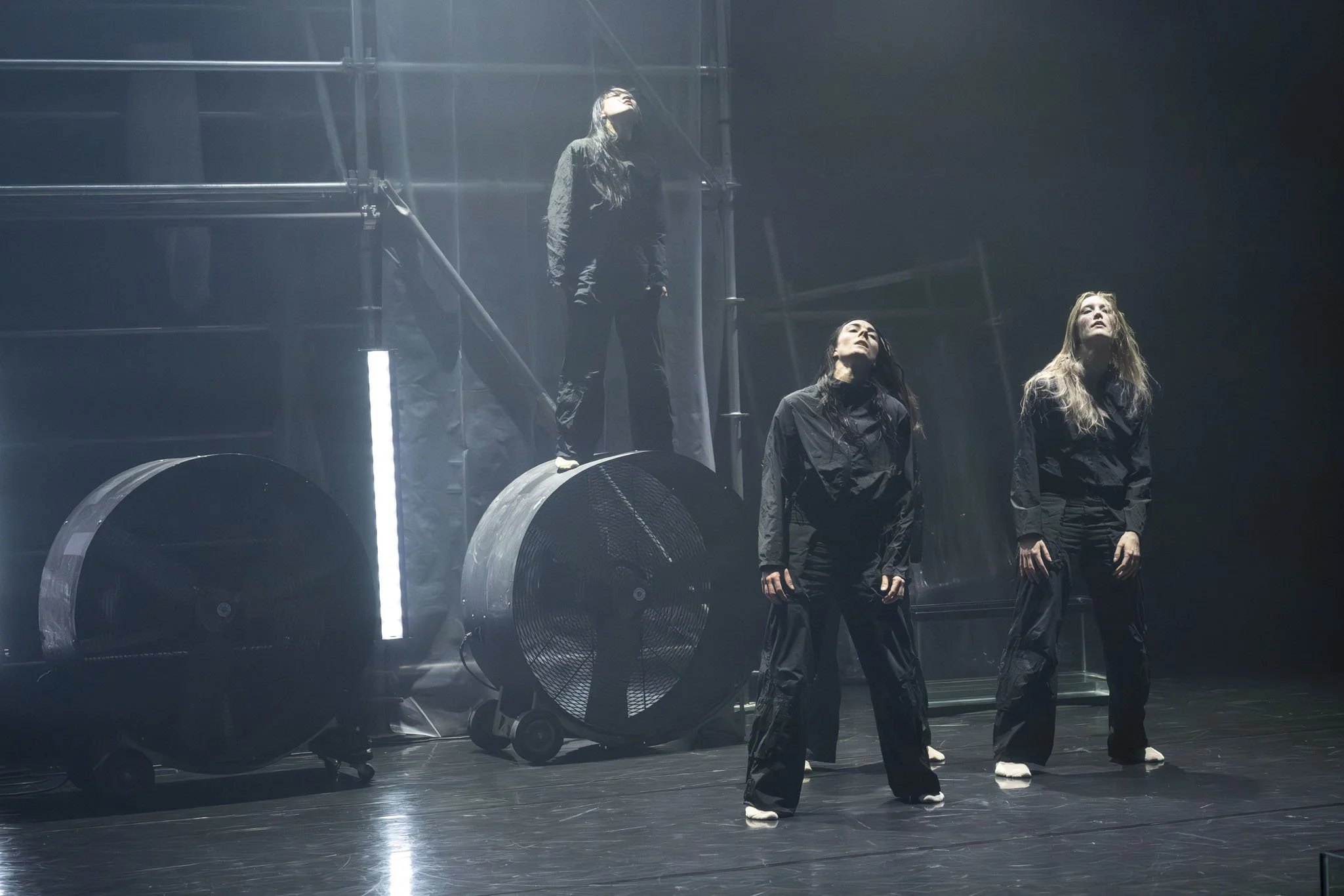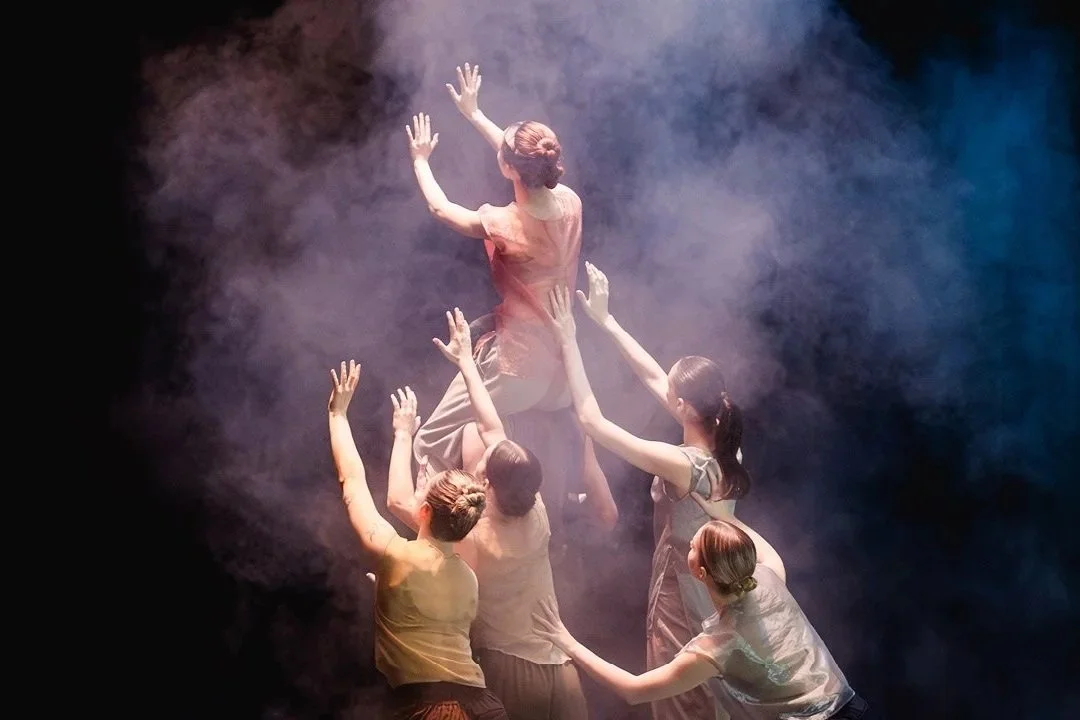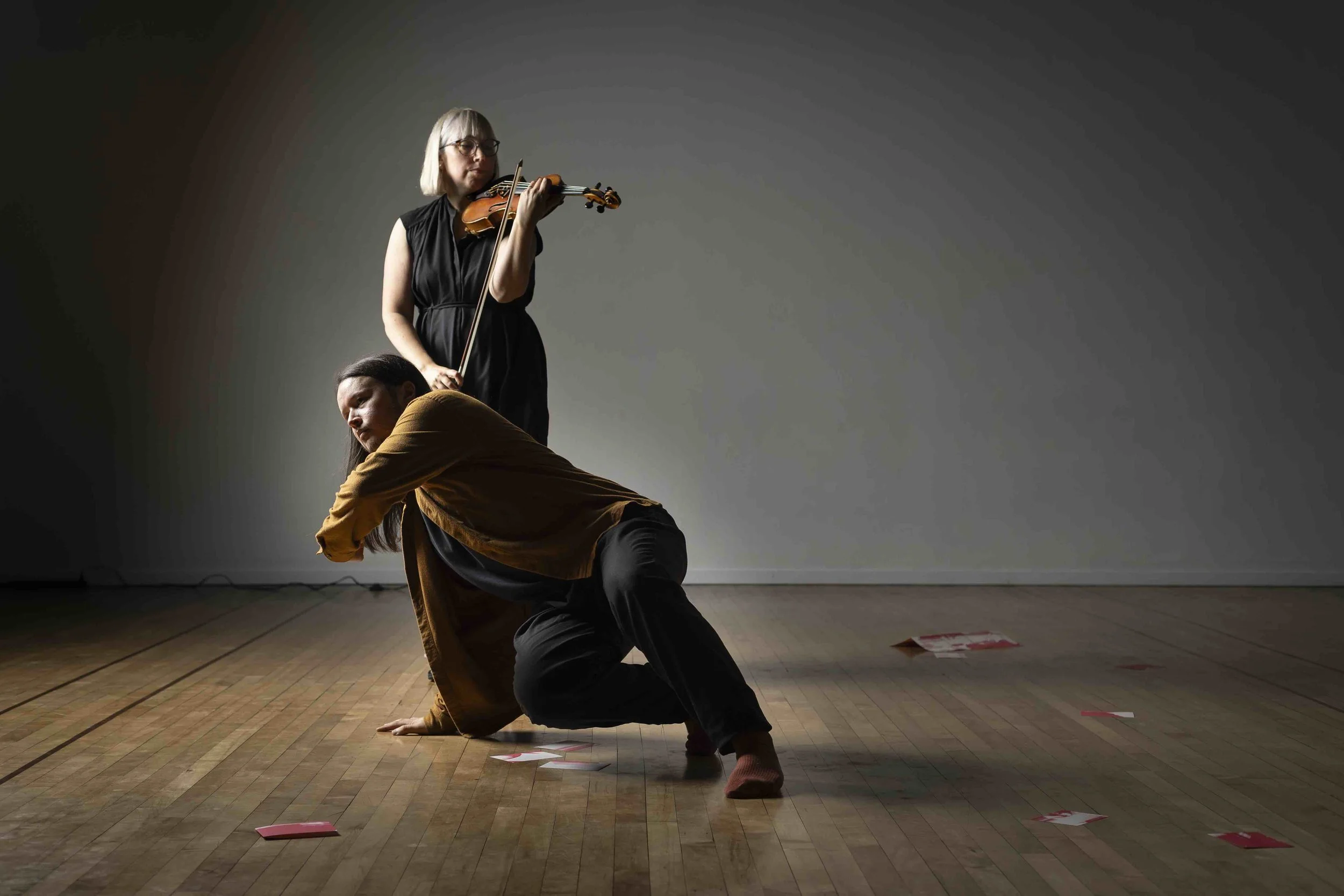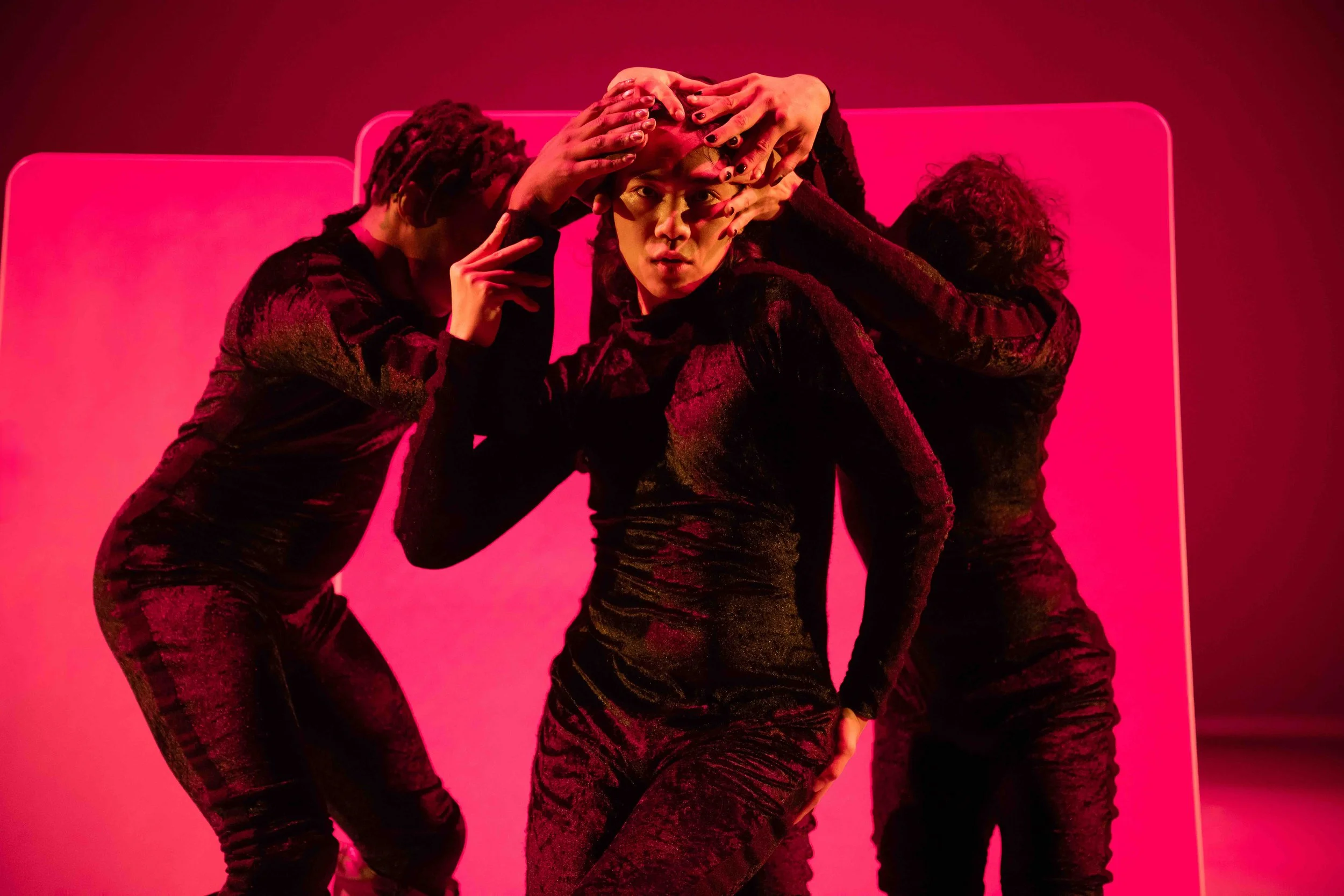
In La Marée Noire, dancers express hope and despair in the aftermath of an oil spill
Presented in Vancouver by Pi Theatre, Fleuve | Espace danse’s site-specific piece references the pollution caused by the Lac-Mégantic rail disaster

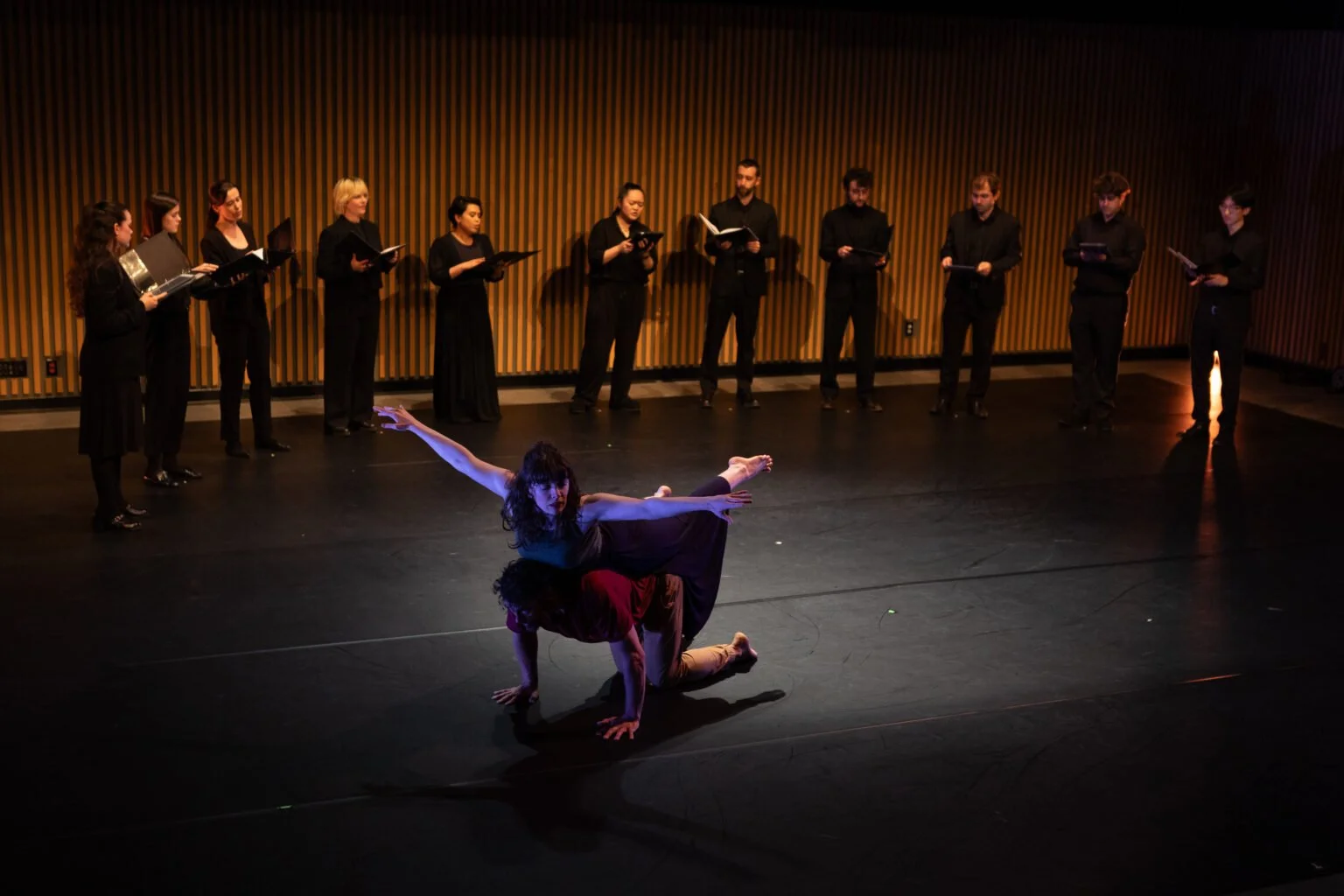
La Marée Noire. Photo by Tania Hillion
Pi Theatre presents Fleuve | Espace danse’s La Marée Noire at Spanish Banks East on August 25 at 3:30 pm and 7 pm, as part of the Pi Provocateur series
ON JULY 6, 2013, just after 1 am, a freight train carrying 7.7 million litres of petroleum crude oil derailed near downtown Lac-Mégantic, Quebec. The resulting explosion and blaze consumed the town centre and killed 47 people, making it the deadliest rail disaster in Canada since the country’s Confederation.
Among the many insidious consequences of the tragedy is that approximately one hundred thousand litres of oil seeped into the Chaudière River. A few hours north of Lac-Mégantic, on the shore of the Saint Lawrence River—which is fed by the contaminated Chaudière River—lies the small village of Saint-Jean-Port-Joli, population 3,300. It’s there that choreographer Chantal Caron is based.
In Caron’s 2024 short film “Marée Noire”, two dancers meet atop the frozen Saint Lawrence River, dressed in swaths of heavy black fabric that spread out around them like oil spills in reference to the disaster. When Stir connects with the French-speaking Caron by Zoom, she’s joined by “Marée Noire” dancer Geneviève Robitaille, who vividly recalls what it was like filming the project in the dead of Quebec winter at -30ºC, as a snowstorm whipped around them.
“The first day is fun. The second day is fine. Then the third day, it’s like the limit gets closer,” Robitaille says. “You reach it faster during the day, but you still have to perform….And I mean, it’s one of the best life memories. Being on the Saint Lawrence River in this situation, doing the impossible? Dancing on ice floating on the Saint Lawrence River? Yeah. Incredible.”
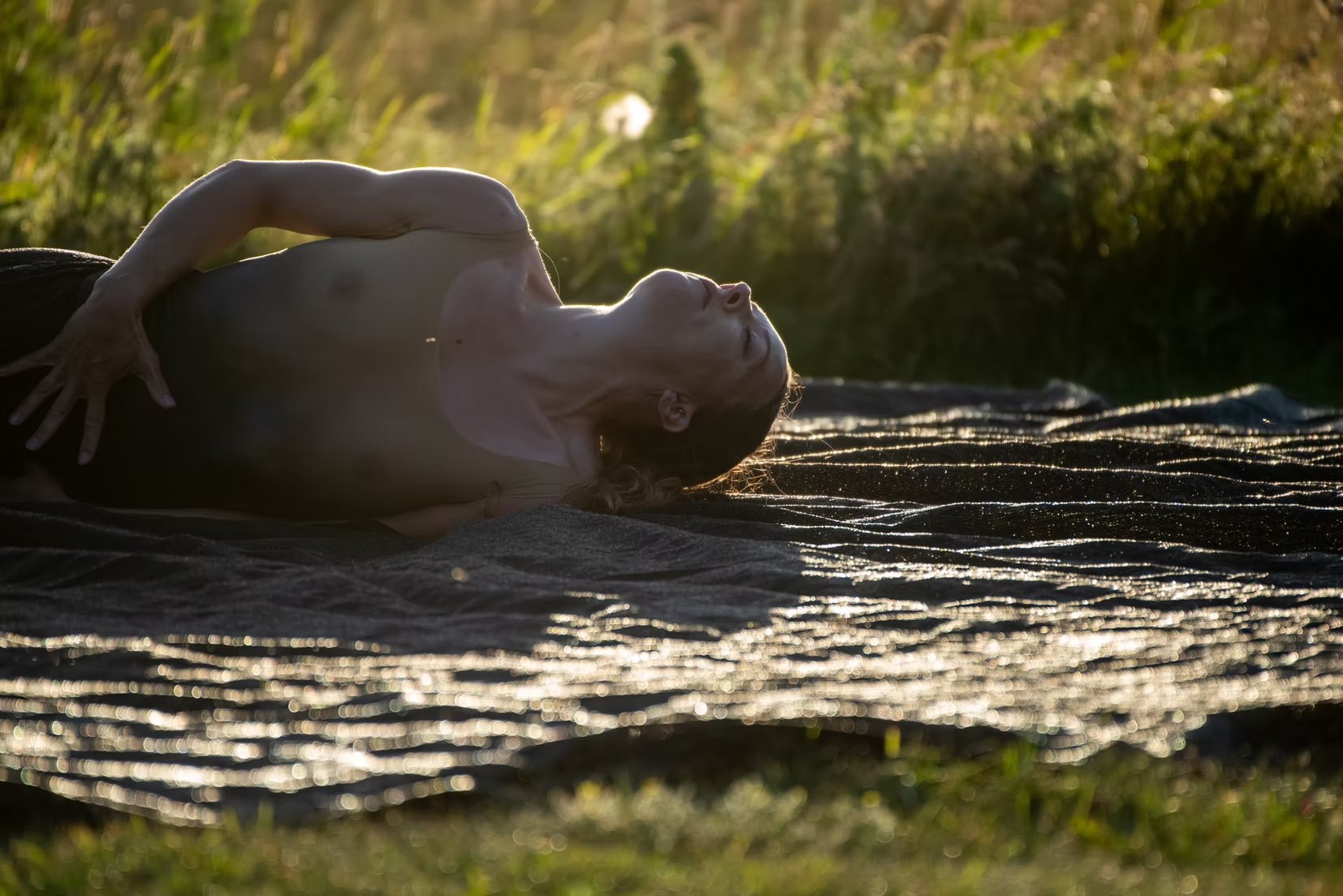
Marie-Ève Demers in La Marée Noire. Photo by Mathieu Gosselin
Caron is the founding artistic director of Fleuve | Espace danse, with which she often creates contemporary-dance pieces revolving around nature. The company is bringing La Marée Noire, a live version of Caron’s film, to Vancouver on August 25, which Pi Theatre will present at Spanish Banks as part of the Pi Provocateur series.
La Marée Noire is by default a site-specific piece. At Spanish Banks, performers Robitaille and Marie-Ève Dion can dig their feet into the sand with a softness and a sinking feeling that informs the body differently than if they were dancing on ice.
When asked about what inspires her choreography style, Caron says, “Ça va toujours venir d’un élément extérieur,” meaning it’s always derived from what she finds outdoors. Oftentimes, that’s birds, like the flapping of a goose’s wings; or, in the case of La Marée Noire, it’s the power of the wind.
“There was a whole research around the wind, and how the upper part of the body moves influenced by the wind,” Robitaille translates. “But at the same time, the lower body is stuck in the dress, kind of like it’s submerged in water or in oil.”
Caron explains with a smile how that sensation of having an immobilized trunk and freely moving arms transports her back to the Quebec blizzards of her childhood. So much snow would fall that she could traipse into it up to her waist, effectively trapping her lower body in a frozen wall.
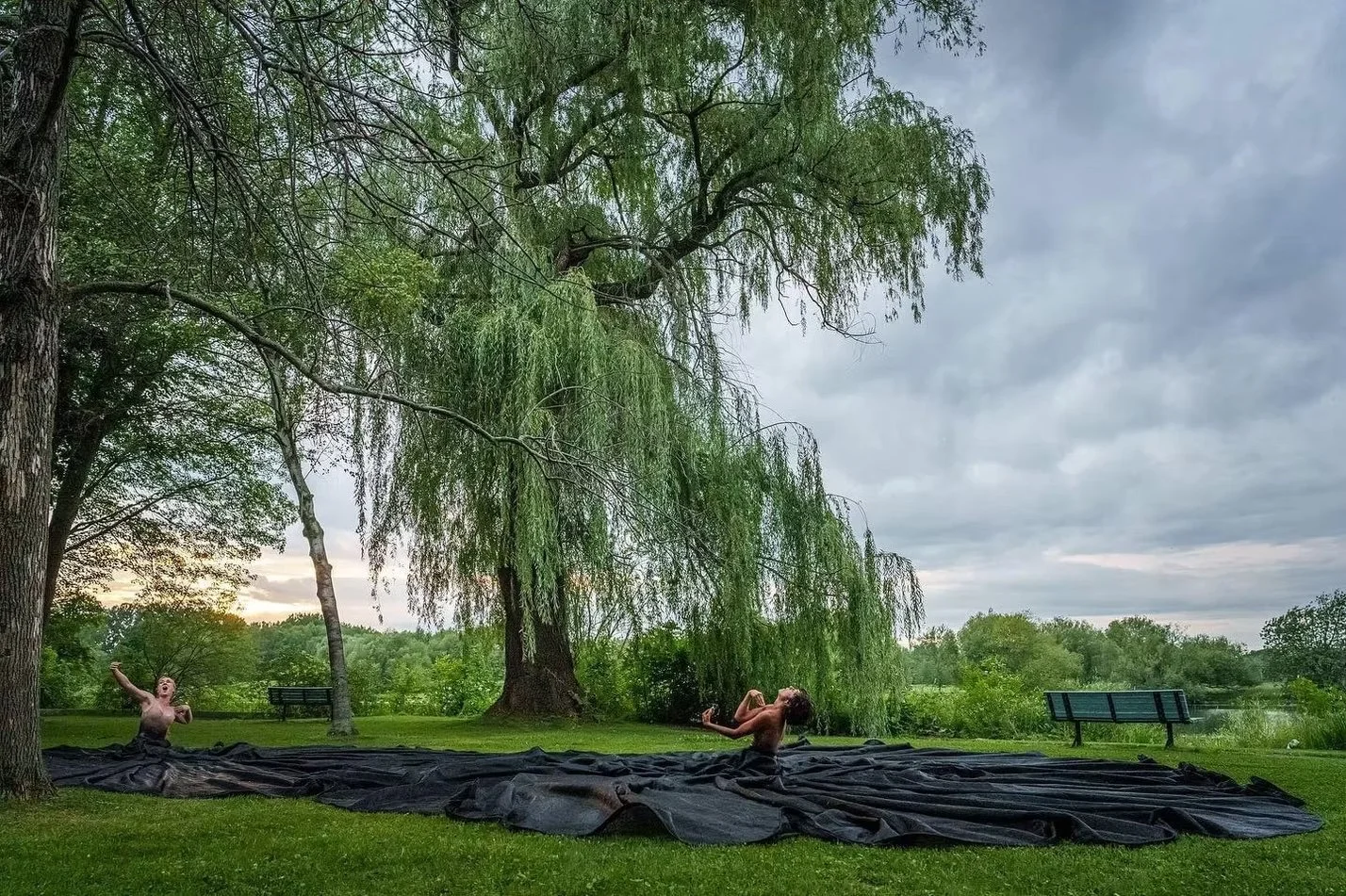
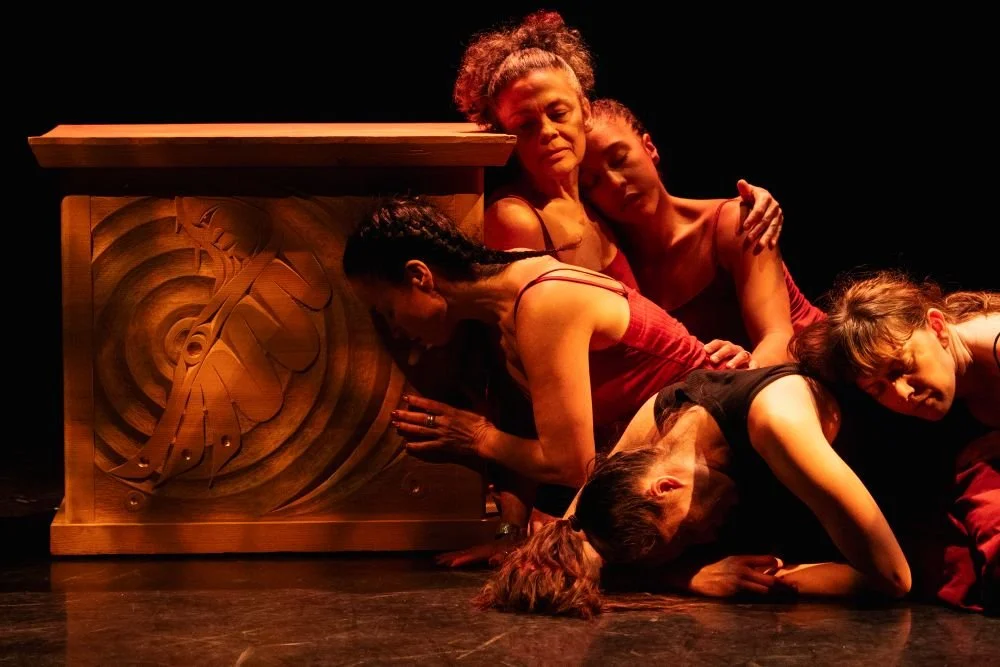
La Marée Noire. Photo by David Wong
The dresses worn in La Marée Noire have that same effect on the dancers, pulling them down with a soft weight. The costume design was suggested by Caron’s husband; he was throwing away an old threaded-plastic pool cover that he urged his wife to upcycle for a piece.
“Ça représentait vraiment super bien tout aspect de l’écologie. C’était comme un cadeau-là,” Caron says, describing how receiving the worn material was truly a gift because of how well it symbolizes different ecological elements. The fabric doesn’t belong in nature. It reflects the light and spreads unrelentingly over the landscape, just as an oil spill would.
Now that Caron is an established artist, the urge to draw on the environment as a source of inspiration is stronger than ever.
“She’s 65,” Robitaille relays, “and she feels that’s what she gives permission to herself to talk about because she has the expertise of being in nature, and being an artist working in nature. And there’s something about just allowing herself to do that. Now for her, it’s important that she lives in nature. She sees the beauty in it and just lets it speak.”
La Marée Noire features an original contemporary soundtrack by Pierre-Marc Beaudoin and Lévy Bourbonnais that traces an arc of emotions, from despair to hope. Environmental disasters (such as what happened in Lac-Mégantic) often bring up similar feelings in those who bear witness to them. And as Caron points out, sometimes all we can do is have faith that the Earth will overcome the damage it has endured.
“In the end, the strength of nature will for sure win,” Robitaille translates. “So, in any case, whatever we do, there’s this hope that nature will know and will do exactly what it needs to do.” 

Related Articles