Portrait of stifling patriarchy in A Doll’s House retains powerful relevance
With Amy Herzog’s adaptation of the 19th-century classic by Henrik Ibsen, the Arts Club creates a psychological and social vision that is startlingly contemporary
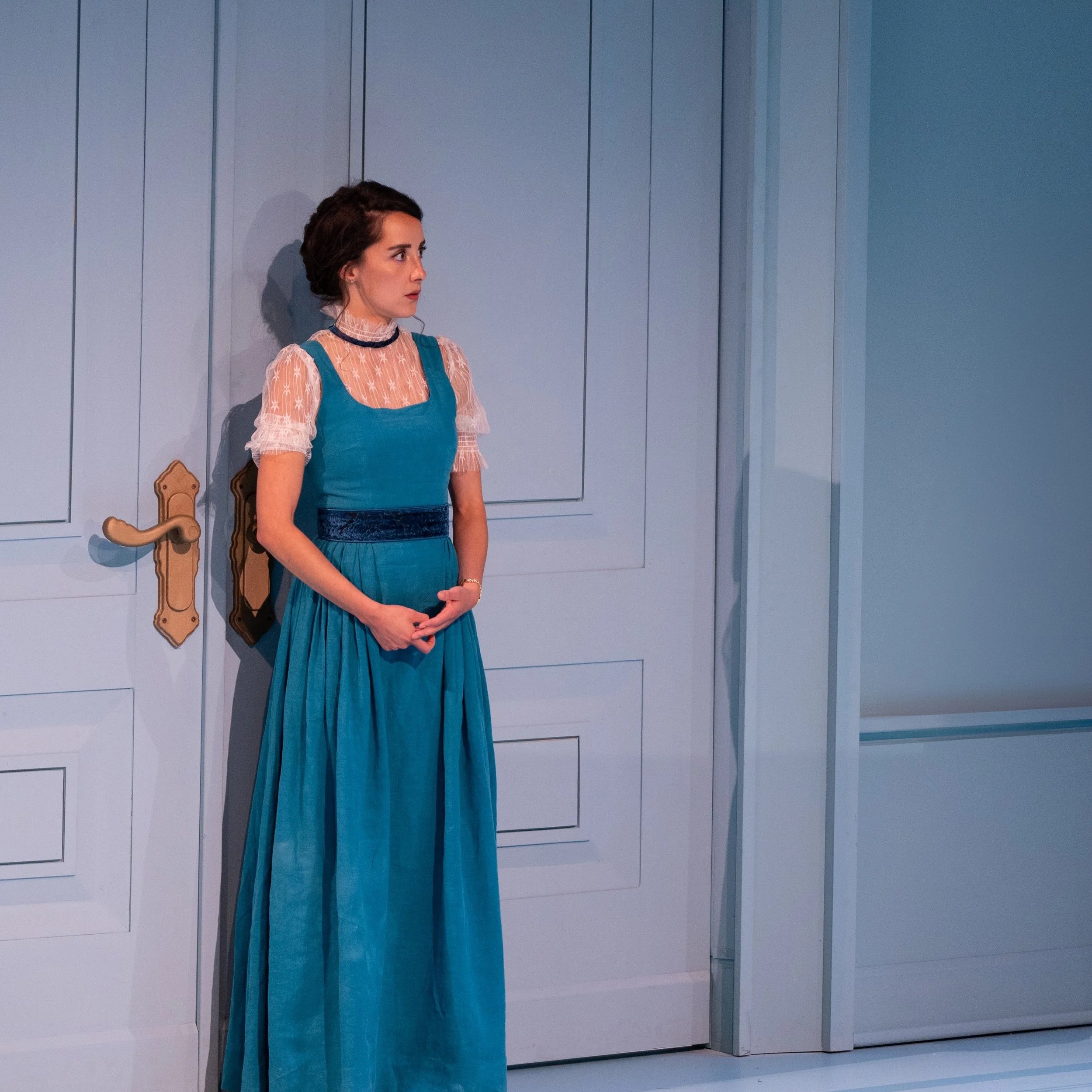
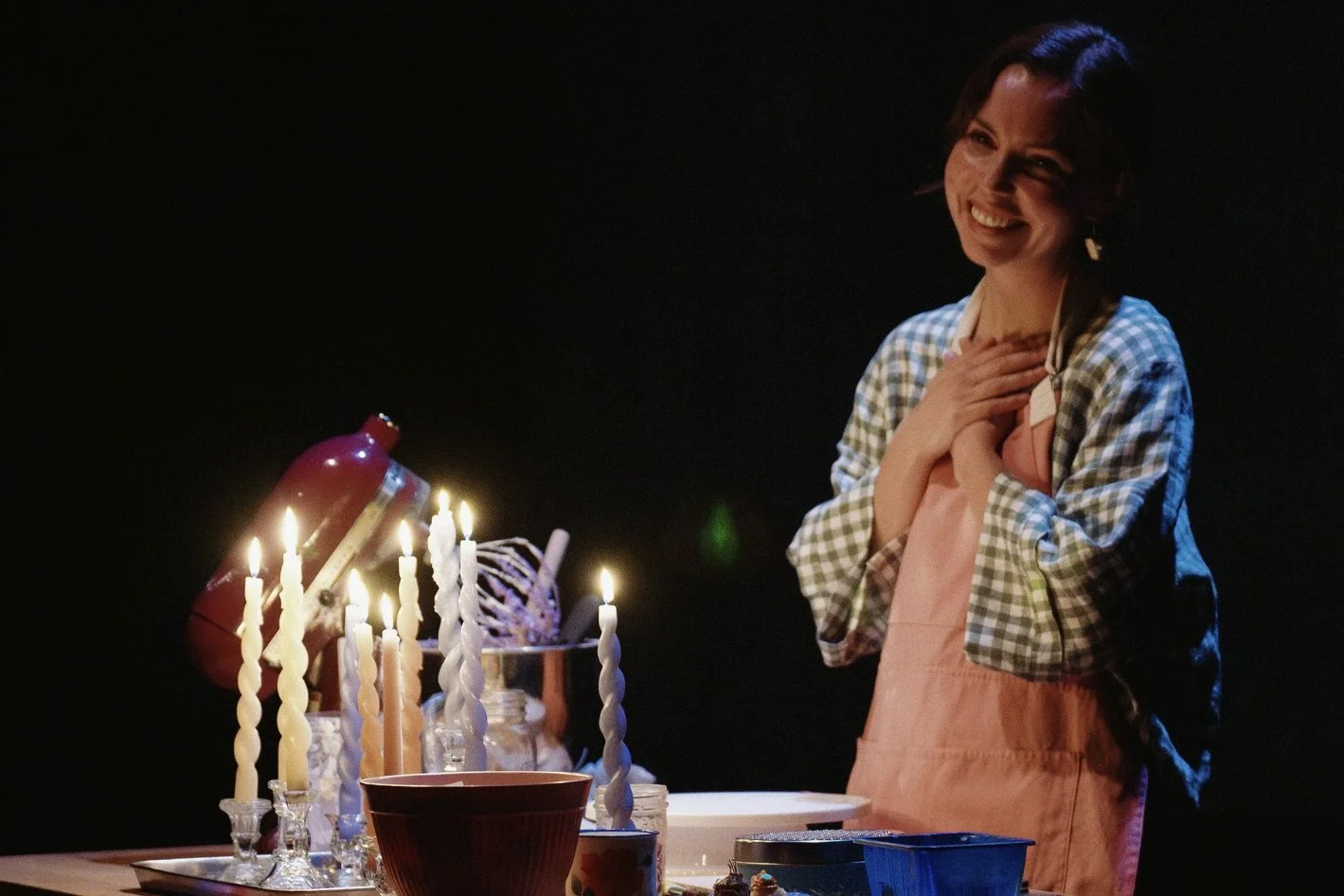
Alexandra Lainfiesta in A Doll’s House. Photo by Moonrider Productions
In partnership with Theatre Calgary, the Arts Club Theatre presents A Doll’s House at the Stanley BFL CANADA Stage to October 5
WHEN IT COMES TO adaptations, A Doll’s House has a rather tricky history.
When Henrik Ibsen’s drama—already a hit in Denmark and Sweden—was slated for a German run in 1880, noted actor Hedwig Raabe refused to take on the central role of Nora Helmer unless the play’s final scene was changed.
Ibsen considered it a “barbaric outrage”, but he begrudgingly complied, giving Nora a conventionally happy ending and effectively neutering his own biting social commentary.
In Britain, A Doll’s House was seen as problematic enough to warrant the creation of an entirely rewritten—and retitled—“sympathetic” version, Breaking a Butterfly, for the London stage in 1884.
Theatregoers’ sensibilities have changed considerably since Ibsen’s day. A Doll’s House—which tells the story of one Norwegian woman pushing back against a stifling marriage and a broader society that offers her little opportunity of escape—retains all of its power, even as its moral ambiguity is less shocking now than it must have been in 1879.
When American playwright Amy Herzog adapted the play in 2023, her intent was not to blunt its impact, but to streamline the story and strip away the trappings of 19th-century Norway.
“I would say Amy stays pretty loyal to the core story and narrative and point of view of the script,” says Alexandra Lainfiesta, who plays Nora in the Arts Club production of Herzog’s adaptation. “I think what she does with this adaptation is, she really brings clarity and immediacy. She makes the language startlingly present; it feels like today. She trims away any of the ornate 19th-century language that is in Ibsen’s play, and it really gives Nora—and, I would say, all the other characters—a dialogue and speech that feels sharp and lived-in and urgent. It’s a very visceral, immediate adaptation.”
In the play, Nora and her husband, Torvald (played by Daniel Briere in the Arts Club production), have returned to Norway from a trip to Italy, where he sought medical treatment for an unspecified illness. Torvald assumes that Nora's recently deceased father had supplied the funds that paid for all of this. The truth, however, is that she has illegally borrowed the money, forging her father’s signature to do so, since the laws of the day prohibited women from making such financial transactions without a man signing off on them.
“A woman cannot be herself in modern society,” Ibsen wrote while drafting A Doll’s House, arguing that it is “an exclusively male society, with laws made by men and with prosecutors and judges who assess feminine conduct from a masculine standpoint!”
The only other person who knows of Nora’s deception is Nils Krogstad, who helped her arrange the loan as an employee of the very bank where her husband has just risen to the rank of manager. Torvald’s promotion returns him to his rightful role as the family breadwinner, which in his mind serves to justify and embolden his treatment of Nora and their children as his playthings.
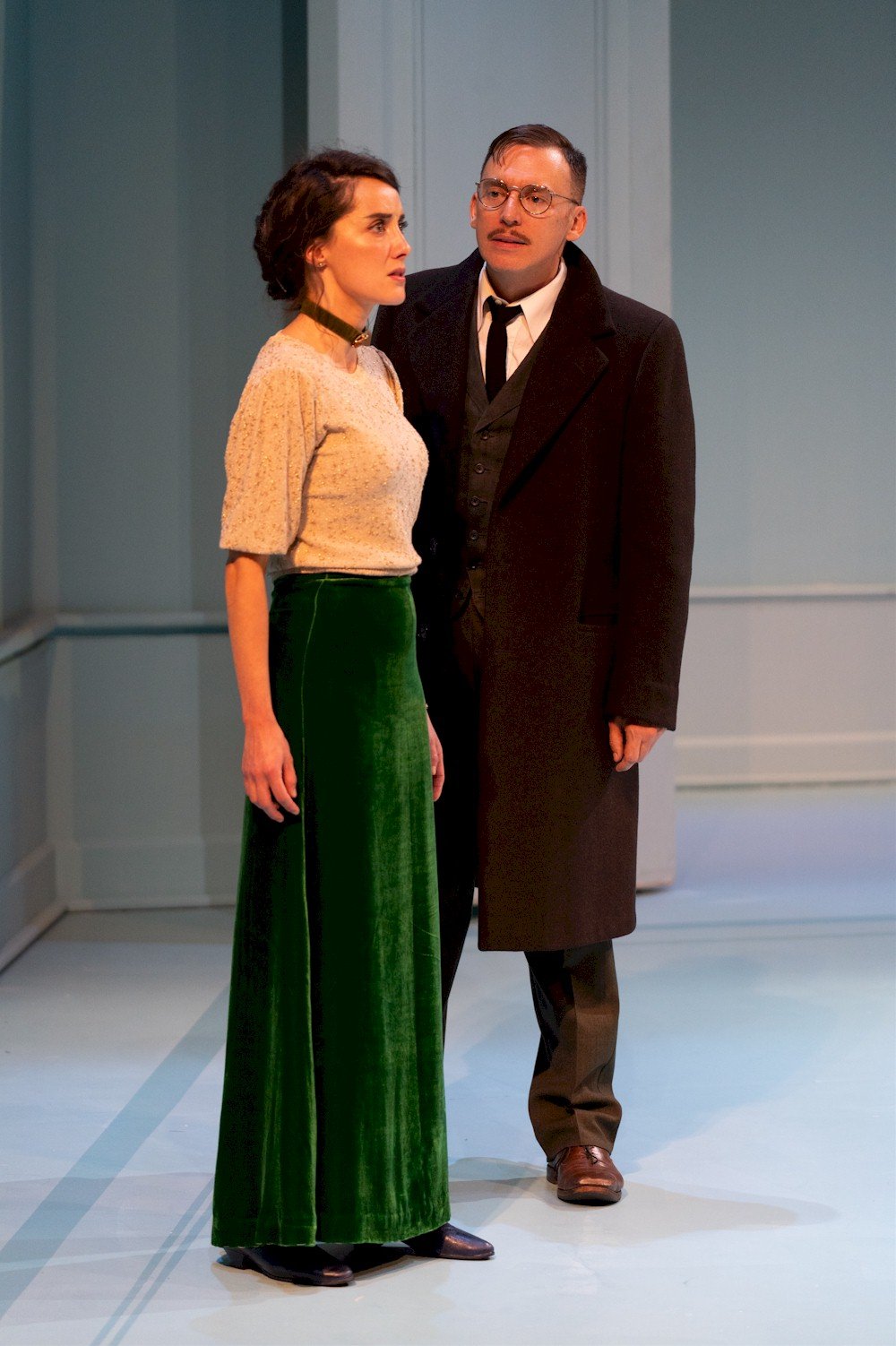
Alexandra Lainfiesta and Ron Pederson in A Doll’s House. Photo by Moonrider Productions
“In my opinion, money is not just currency in the play,” Lainfiesta says. “It really represents patriarchal control. And I think that’s where the power of the narrative is, because Nora is trapped by financial dependence, and Torvald’s authority is reinforced through his role as a provider, a financial provider.”
Nora finds her carefully constructed dollhouse of lies threatened when Torvald decides to fire Krogstad for exceedingly petty reasons. A desperate Krogstad (played at the Stanley by Ron Pederson) blackmails Nora, threatening to expose her secret unless she convinces Torvald to let him keep his job.
Lainfiesta acknowledges that not all of Nora’s actions paint her in a purely sympathetic light, in particular the scorched-earth decision she makes at the end of the play—the one that so scandalized Hedwig Raabe.
“The complexity of this role, and why it is iconic, is because she is not a benevolent figure,” Lainfiesta says. “She begins the play in illusion, and almost childlike, and she is a product of a patriarchal society. And so is Torvald. Both of them are.”
Jessica Chastain played Nora in director Jamie Lloyd’s 2023 Broadway run of the Herzog adaptation, a turn that won her the Drama Desk Award for Outstanding Lead Performance in a Play. In an interview with TheaterMania, Chastain said of Nora: “She’s playing the part of the childlike, guileless woman in order to gain favor and in doing so, she’s participating in holding up a system that oppresses her, and in the end, she decides to let it all come crashing down.”
“The way I play her is bringing in all of the complexities of what it is to be a human who is in the journey between performing roles society has prescribed to her, and then going into self-actualization,” says Lainfiesta, who argues that the cracks in Nora’s facade are evident right from the start. “At the beginning we learn she borrowed money in secret. And that is breaking both the law and gender rules to save her husband’s life. So that, to me, shows an act of rebellion, that she already carries in her this sense of independence, or need to be seen as an equal.”
Lloyd’s production was noted for its stark minimalism, with Chastain and her castmates clad in black and performing on a bare stage. “Lloyd’s ascetic production is like the most polished staged reading on earth: it eliminates nearly every conventional marker of character, location, gesture,” opined Helen Shaw in her review for the New Yorker.
At the Stanley, director Anita Rochon hasn’t taken quite so severe an approach, but Lainfiesta gives Amir Ofek high marks for the understated grace of his set design.
“It’s raked and painted blue, with minimal furniture,” she says. “And what that does is it really strips away distractions and centres the play on the performances and the psychological dynamics between all of the characters. So I found that very powerful for our production.
“Narda McCarroll is our lighting designer, and the way she’s also created intimacy with her lighting, it really highlights even the slightest detail—gesture, glance, breath,” Lainfiesta continues. “I feel like it reaches the entire audience at the Stanley Theatre, and with those elements it’s kind of like an atmosphere of a magnifying glass of realism.” 

Related Articles